 Infra
InfraHow to get cited in Google AI Overviews and ChatGPT in 2026
Only 38% of AI Overview citations rank in Google's top 10, and about 12% of ChatGPT, Gemini and Copilot citations do. Six steps to get cited by both.
At the end of this guide you will have one page that Google AI Overviews and ChatGPT search can both reach, read and quote. Getting cited in both means passing two different pipelines. Google picks supporting links from its own index. ChatGPT search answers from what OpenAI's crawler and its search partners return. A page can win in one engine and stay invisible in the other.
Ranking alone no longer closes the gap. In a March 2026 study of 863,000 keyword results and 4 million AI Overview URLs, Ahrefs found that 38% of the pages cited in AI Overviews also ranked in Google's top 10, down from 76% in its July 2025 study. Across 15,000 prompts, the same team found that only about 12% of the links cited by ChatGPT, Gemini and Copilot ranked in Google's top 10 for the same prompt. Both engines read well past page one. They still need to reach the page, trust it, and find a passage worth quoting. The six steps below cover each of those.
What you need before you start
- Access to robots.txt and to the firewall or CDN rules in front of the site.
- Google Search Console verified for the domain.
- Server logs, or a bot report that shows user agents and status codes.
- One page that answers a question people actually ask. The steps run page by page, so start with the page that already earns impressions.
Step 1: Let both crawlers in
Each engine reads the site through its own crawler, and each crawler has a sibling you can block without leaving search.
On Google, AI Overviews and AI Mode come from the same Googlebot crawl as classic results. Google-Extended is a separate token, and Google describes it as the way to limit AI training and grounding in some of its other systems. Blocking it does not take a page out of AI Overviews. The controls that do are nosnippet, data-nosnippet, max-snippet and noindex, and each of them also shortens or removes the classic snippet.
On ChatGPT, OpenAI documents two independent bots. OAI-SearchBot surfaces sites in ChatGPT search, and a site that blocks it is not shown in ChatGPT search answers (it can still appear as a plain navigational link). GPTBot collects content for model training. You can allow the first and refuse the second in the same file. OpenAI says a robots.txt change takes about 24 hours to reach its search systems.
User-agent: OAI-SearchBot
Allow: /

User-agent: GPTBot
Disallow: /

User-agent: Googlebot
Allow: /
Then check the layer in front of robots.txt. A firewall or bot-management rule can refuse a crawler that robots.txt allows, and the crawler never reads the file. Cloudflare started blocking AI crawlers by default on new domains in July 2025; we covered how to open that door without weakening security. Confirm it in the logs: OAI-SearchBot requests should come from the ranges OpenAI publishes in searchbot.json and get a 200, and so should Googlebot's.
Step 2: Get the page indexed and eligible for a snippet
Google states the requirement in one sentence: to be shown as a supporting link in AI Overviews or AI Mode, a page must be indexed and eligible to be shown in Google Search with a snippet. There are no extra technical requirements, no AI text files to create, and no special schema.org type.
Run the URL through the URL Inspection tool in Search Console. Three answers matter: the page is indexed, the canonical Google chose is the one you meant, and the rendered HTML contains the passage you want quoted. AI crawlers are not documented to run JavaScript the way Googlebot does, so the safe assumption is that they read only the HTML the server sends. If an answer appears only after client-side code runs, move it into the server-rendered page.
ChatGPT search has no equivalent of URL Inspection. OpenAI's publisher FAQ says it can learn about URLs from third-party search providers as well as from its own crawl, and in 2025 Ahrefs described Bing as ChatGPT's built-in provider, while also finding signs of Google results in its citations. Verifying the domain in Bing Webmaster Tools and submitting the sitemap there takes under an hour and covers that path.
Step 3: Write answer blocks a model can lift
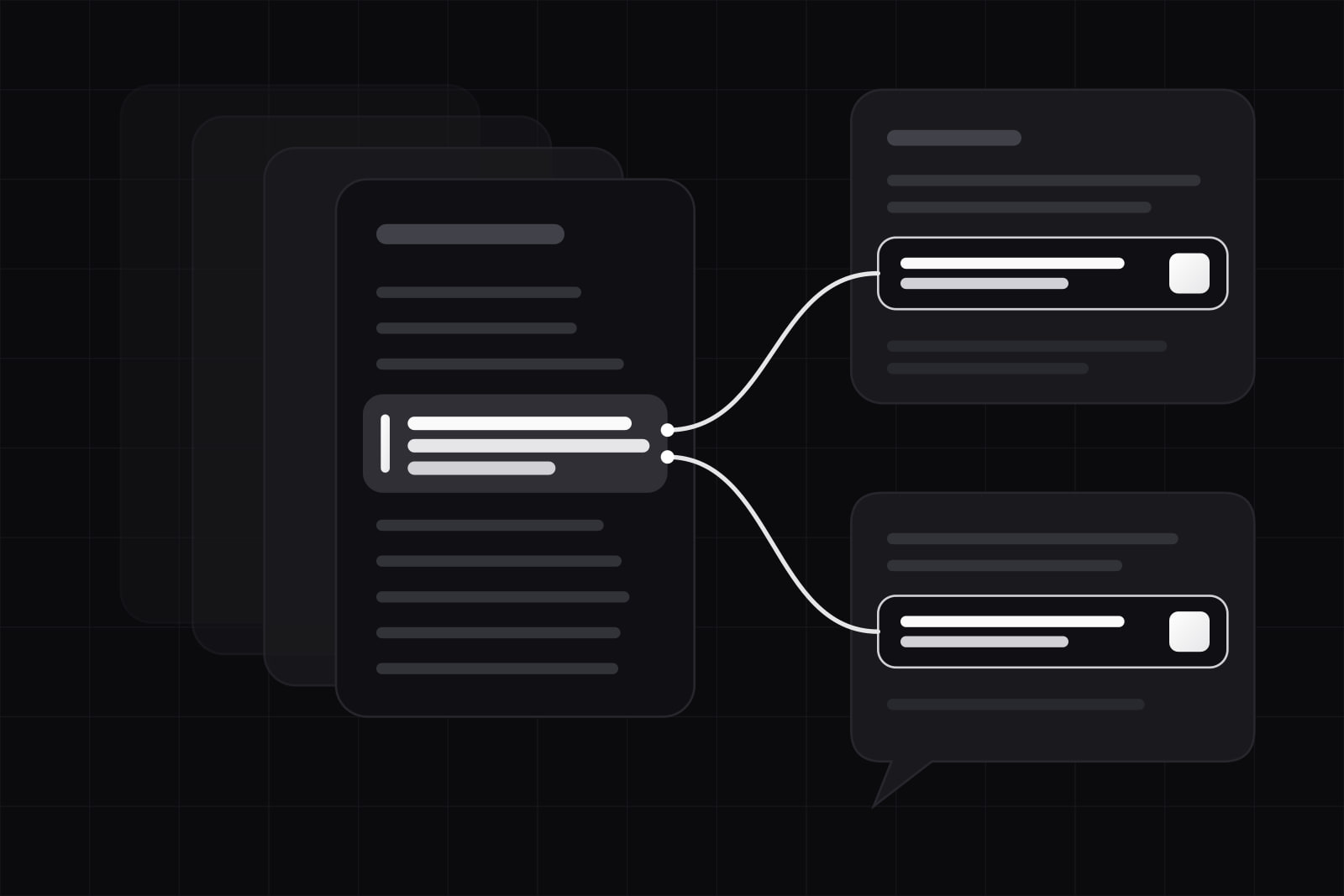
Both engines quote passages, and the page is only the container. Google says AI Overviews and AI Mode may use a query fan-out technique: they issue several related searches across subtopics and build the response from the pages each one returns. A page that answers four sub-questions clearly has four chances to be picked.
We write each block to the same pattern:
- A heading phrased as the question someone would type, such as "Does blocking GPTBot remove a site from ChatGPT search?"
- A first sentence that answers it in full, with the subject named. "Blocking GPTBot does not remove a site from ChatGPT search" survives being quoted on its own. "No, it doesn't" does not.
- Two to four sentences of support: the condition, the number, the exception.
- No phrase that depends on the paragraph before it, such as "as mentioned above" or "this approach".
The opening of the article deserves the most care, because it is the passage both engines read first. We explain how to write the first 200 tokens in a separate guide.
Step 4: Back every block with evidence the engine can check
The 2024 KDD paper that named Generative Engine Optimization (Aggarwal et al.) tested nine rewriting methods on a benchmark of 10,000 queries. Citing sources, adding quotations and adding statistics were among the strongest, with visibility in generative answers rising by up to 40%.
In practice that comes down to three habits. Put the number in the sentence that makes the claim, with the source linked right there instead of in a footer. Link the primary source (the vendor's documentation, the study itself) rather than a blog that summarised it. And give the page one fact nobody else has: a measurement from your own logs, a test you ran, a count from your own product. A page that repeats the consensus competes with every other page that repeats it.
Step 5: Make the page easy to date and attribute
Google is explicit that AI features need no special markup. Structured data still has a job: it tells every crawler who wrote the page and when, and Google lists matching structured data to the visible text among its best practices for AI features. We ship Article JSON-LD with author, datePublished and dateModified, print the same dates on the page, and add FAQPage only where a real FAQ exists. The setup is in our guide on adding JSON-LD to a blog article.
Dates matter because answers about tools, prices and policies go stale, and an engine choosing between two similar passages has every reason to prefer the current one. A visible "Updated" line backed by a real review is the routine we describe in the 90-day freshness rule.
Step 6: Get mentioned where the engines look
The Ahrefs overlap study closes on practical advice: optimise for the query variations around a topic, build topic clusters, and own the entity. The pages AI assistants cite are often not the ones ranking for the original prompt, so the brand has to appear across the sources the engines retrieve: documentation, comparison pages, forums, other publications. We looked at whether brand mentions or backlinks predict AI citations in a separate piece.
How do you know it worked?
Google does not report AI Overviews on their own. Clicks and impressions from AI Overviews and AI Mode are counted in the Search Console Performance report under the Web search type, together with classic results. Track the pages you changed query by query, and check the AI Overview for those same queries by hand.
ChatGPT adds utm_source=chatgpt.com to the links it sends, according to OpenAI's publisher FAQ, so its referrals show up in any analytics tool. Server logs tell you whether OAI-SearchBot fetches the page at all.
Neither number counts citations that earn no click. For those, keep a fixed panel of 20 to 30 prompts, run it every month in both engines, and record whether the page is cited. The metrics we track are in GEO KPIs in 2026.
Common failures and how to fix them
- The page ranks but is never cited. The answer sits under three paragraphs of introduction. Put a one-sentence answer directly under each question heading.
- ChatGPT shows the page as a link but never quotes it. OAI-SearchBot is blocked somewhere, in robots.txt or in the firewall. Check both, then allow about 24 hours.
- Google-Extended is blocked and the page still appears in AI Overviews. That is expected, since Google-Extended does not govern Search. Use
data-nosnippeton the passage you want kept out, knowing it also leaves that passage out of the classic snippet. - The engine quotes an outdated version. Update the page, change
dateModified, and request reindexing from URL Inspection.
Sources
- Ahrefs: 38% of AI Overview citations pull from the top 10 (March 2026)
- Ahrefs: only 12% of AI cited URLs rank in Google's top 10 for the original prompt (August 2025)
- Google Search Central: AI features and your website
- OpenAI: overview of OpenAI crawlers
- OpenAI: publishers and developers FAQ
- Aggarwal et al., GEO: Generative Engine Optimization (KDD 2024)
- Bing Webmaster Tools
Frequently asked questions
Yes. Neither engine documents a minimum domain age: Google requires the page to be indexed and eligible for a snippet, and ChatGPT search requires OAI-SearchBot to be allowed. Ranking is not a gate either. In Ahrefs' March 2026 data, 31% of AI Overview citations came from pages beyond position 100 for that query. What a new site lacks is mentions elsewhere, so the realistic first wins are narrow, specific questions with few good answers on the web.
No. Google says outright that appearing in AI Overviews and AI Mode needs no machine-readable files, AI text files or special markup. OpenAI's crawler documentation covers robots.txt and its published IP ranges, and says nothing about llms.txt. The file does no harm and can help agents and tools that read documentation, but for these two engines the work that counts is crawler access, indexing and the content itself.
Neither Google nor OpenAI publishes a timeline. Two delays can be measured: OpenAI says a robots.txt change reaches its search systems in about 24 hours, and Google has to recrawl and reindex the page, which URL Inspection lets you request and confirm. After that, citation depends on how many strong pages already answer the same question. Run the prompt panel monthly and judge the change over two or three runs, since a single check moves with every model update.
Related articles
Infra Infra
InfraCloudflare Workers AI vs the OpenAI API: where each wins
Workers AI bills $0.011 per 1,000 Neurons and runs on GPUs in over 180 cities. Here is where that beats a hosted API, and where it does not. Infra
Infra