
Full-stack development
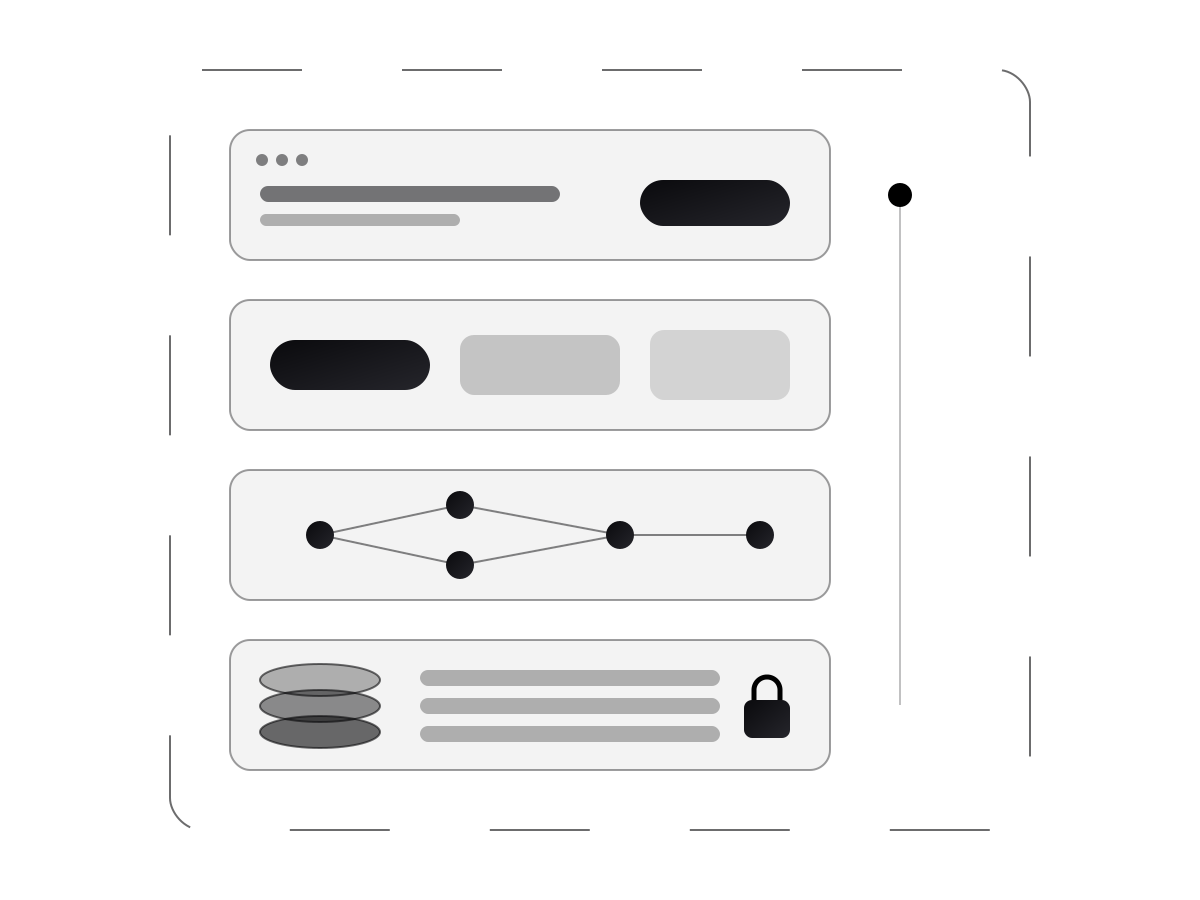
Full-stack development starts paying off when the same person can write the React component and the database query that feeds it. The decision about how the data is shaped happens with both ends in view, in the same head and the same pull request. We work that way: schema, API, components and deploy live in one repository, on the design system we maintain. A new feature costs the change itself, and the coordination tax stays at zero.
What it includes
- Single repository, strict TypeScript across every file. A refactor in one place surfaces in the next pull request.
- Postgres with row-level security, schema drawn around how the product reads and writes data.
- Auth, file storage and realtime channels written once, reused wherever the product needs them.
- Payments where the product needs them: checkout, subscriptions, customer portal, webhook reconciliation.
- A CMS designed around the product, with the database schema and the editor drawn together.
- Background jobs, scheduled tasks, error tracking: the operational layer that keeps production alive between releases.
- Multi-language routing built into the architecture, so a second locale arrives without rewriting the data model.
What you get
- One team across the whole product: one codebase, one design system, one invoice. No coordination tax between vendors.
- Code an internal hire picks up after launch and keeps extending. Idiomatic TypeScript, no clever tricks that need the original author to read.
- A stack we already run in production on other projects, with the playbook for what breaks and how it gets fixed.
- Architecture, build and deploy held inside a single engagement, with the schema and the screens shipping in the same pull request.
Stack
Next.js 16React 19TypeScriptSupabaseStripeCloudflare R2Upstash RedisVercel
Next
Tell us what you are building
A plan, a timeline, and a way forward built together.