
 Design
EAA disproportionate burden: what to document and disclose
The EAA lets you skip an accessibility requirement only with an Annex VI assessment, a notice to each authority and a fresh review every five years.
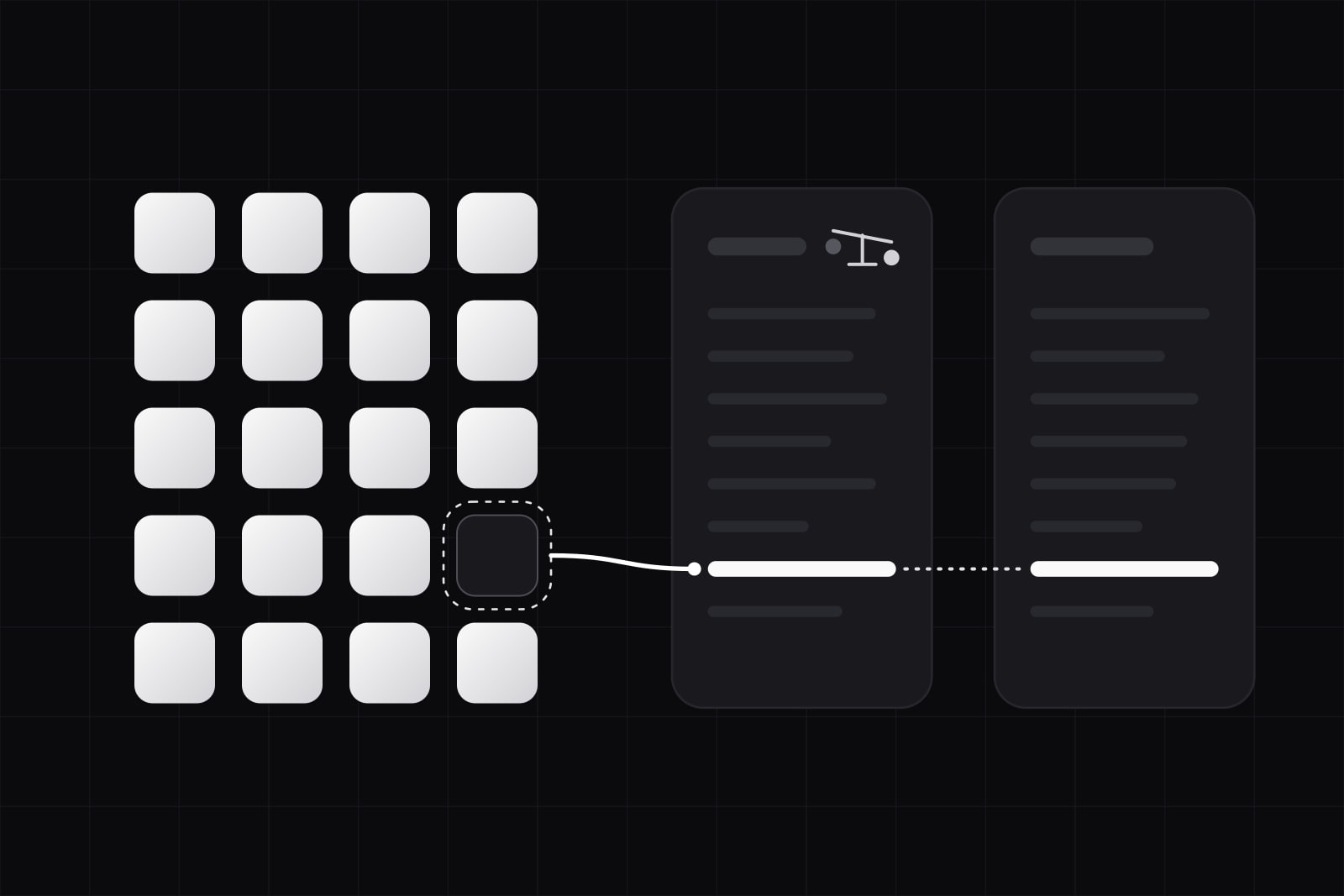
The disproportionate burden derogation is a clause in the European Accessibility Act (Directive (EU) 2019/882) that lets a business set aside one specific accessibility requirement when meeting it would cost more than the business can reasonably carry, and only after it has written the assessment down, kept it and told the authority. It is a documented exception, claimed requirement by requirement, with an expiry date. Teams that read it as a general waiver end up holding a file that contradicts their own accessibility statement.
It matters to any product team selling a covered service in the EU: e-commerce, consumer banking, e-books, electronic communications, passenger transport booking. The obligations have applied since 28 June 2025. Sixteen months later, the teams still behind are the ones most tempted by the exits in Article 14. Those exits are narrower than they look.
Why does the derogation get misread?
Three things push teams toward the wrong reading. The deadline has passed, so any clause that sounds like an exemption gets attention. The word "burden" sounds like a budget conversation. And few people read the directive's recitals, although recital 66 closes the most common argument in advance: "Lack of priority, time or knowledge should not be considered to be legitimate reasons" (Directive 2019/882, recital 66).
So "we didn't plan for it" and "the team doesn't know WCAG yet" are not grounds. The same recital adds that an exception should not go beyond what is strictly necessary, and that every requirement which does not impose a disproportionate burden applies in full. You claim the derogation for one requirement at a time, never for a whole product.
What are the four exits, and which one applies to you?
Article 14 is one of four separate mechanisms. Each has its own conditions and its own paperwork, and mixing them up is the quickest way to get the statement wrong.
- Microenterprise exemption for services (Article 4(5)). A business with fewer than 10 employees and an annual turnover or balance sheet of no more than 2 million euros that provides services is exempt from the service requirements. No assessment, no notice. It does not cover microenterprises that make or distribute products.
- Fundamental alteration (Article 14(1)(a)). Meeting the requirement would change the basic nature of the service. The test is about what the service is, and cost plays no part in it. For a digital service it is a rare case.
- Disproportionate burden (Article 14(1)(b)). The cost of meeting a specific requirement is excessive against the criteria in Annex VI. Assessment, documentation, notice and renewal all apply.
- Transitional measures (Article 32). Until 28 June 2030, a provider may keep delivering its services with products it lawfully used for similar services before 28 June 2025. Service contracts agreed before 28 June 2025 can run unchanged until they expire, for five years at most. Member States may let self-service terminals run until the end of their economically useful life, capped at 20 years after entry into use.
Article 32 is the one most often confused with the derogation. It concerns the products a provider uses to deliver the service, such as the terminals and hardware listed in Article 2(1). Any reading that stretches it to a website or an app is a question for counsel.
What goes into a disproportionate burden assessment?
Annex VI sets three criteria, and all three work on the net costs of compliance:
- The ratio of the net costs of compliance to the overall costs (operating and capital expenditure) of providing the service.
- The estimated costs and benefits for the business against the estimated benefit for persons with disabilities, taking into account how much and how often the specific service is used.
- The ratio of the net costs of compliance to the business's net turnover.
The annex also lists which costs count. One-off organisational costs: hiring accessibility expertise, training people, building a new process, writing guidance, understanding the legislation. Ongoing costs: designing the accessibility features, testing for accessibility, producing documentation (and, for products, manufacturing). Nothing in the list rewards a team for starting late.
Two rules make the assessment hard to stretch. Article 14(6) bars any business that receives funding for improving accessibility, public or private, from relying on the burden ground. And Article 14(7) lets the Commission specify the criteria further through delegated acts, so check the current text on EUR-Lex before you rely on the annex alone.
Who do you have to tell, and what do you keep?
Article 14 sets three duties that run in parallel.
- Document it. The assessment is written down (Article 14(3)), and all relevant results are kept for five years from the last time the service was provided.
- Notify it. When you rely on the derogation for a specific service, you send that information to the authority that checks services in each Member State where the service is provided (Article 14(8)). Microenterprises are excluded from this duty.
- Hand it over. On request, the authority gets a copy of the assessment.
Each Member State names its own authority and its own channel. In Italy, Legislative Decree 82/2022 gives AgID the supervision of services, and AgID runs a platform where users report non-conformities and operators communicate the measures they take (Disabili.com). A business selling in five countries notifies five authorities.
What has to appear in the accessibility statement?
Article 13(2) and Annex V require service providers to publish how the service meets the accessibility requirements, in the general terms and conditions or an equivalent document, in written and oral format, and in a form persons with disabilities can access. The information covers a general description of the service, what a user needs to understand how it works, and how the Annex I requirements are met. It stays available for as long as the service runs.
The derogation's notice goes to the authority. The statement goes to the public. The two have to agree. A statement claiming full conformance, while a burden assessment for captions sits in the files, contradicts the document the authority can ask for, and the gap is easy to spot. The safer pattern names which requirements are met, which are not yet met, the reason, and the date of the next review. Check the wording with counsel, since national transpositions add rules of their own.
When does the assessment expire?
A burden assessment is a snapshot. Article 14(5) makes service providers renew it, for each category or type of service, when the service is altered, when the authority asks, and in any case at least every five years. For a product team, "altered" is the word to watch. A redesign, a new checkout, a new video player: each one changes the service, and each one reopens the question for the requirement it touches.
Non-conformity is a separate duty. If the service fails a requirement and no derogation covers it, Article 13(4) requires corrective measures and an immediate notice to the competent authorities with details of the non-compliance. Penalties are set nationally. Article 30 requires them to be effective, proportionate and dissuasive, and to take into account how many people are affected.
What does this look like on a real backlog?
Take an illustrative case. An online shop with 60 employees has a catalogue of 4,000 product videos recorded before 2025. Captions on new videos are cheap, because the editor adds them at upload. Captioning the archive would need an outside vendor. The first draft of the statement reads: "Some content is exempt due to disproportionate burden."
That sentence fails every test above. A version that holds up looks like this:
- New videos: captioned at upload. No derogation.
- Archive: an Annex VI assessment for the captioning requirement on archived videos only, with the vendor quote, the ratio to the service's operating costs and to net turnover, and the archive's viewing figures (the frequency-of-use criterion).
- Videos on the 200 most visited product pages: captioned now, because that is where people with disabilities meet them, and a burden claim is weakest where use is highest.
- A notice to the authority in each country the shop sells to, a copy filed for five years, and a review date in the calendar.
- A statement that names the archived videos as not yet captioned, with the reason and the review date.
The derogation shrinks from "some content" to one requirement on one slice of the archive. That is the shape recital 66 asks for: as accessible as possible, with an exception no wider than strictly necessary.
Where does design come in?
Every cost line in Annex VI drops when accessibility sits in the design system. Contrast is decided in the tokens, focus states and labels are solved in the components, captions enter through the upload flow. A team that builds it there rarely needs the derogation, and when it does, the assessment covers a legacy corner instead of the core of the product. We covered the build side in accessibility-first design after the EAA and the audit side in why compliant-on-paper products fail audits.
This article explains how the directive's text works. It is not legal advice. National laws transpose the directive with their own procedures, forms and penalties, so a burden claim belongs in front of a lawyer who knows the Member States you sell in.
Sources
- Directive (EU) 2019/882 on the accessibility requirements for products and services, EUR-Lex
- Directive (EU) 2019/882, full text with recitals, legislation.gov.uk
- Directive (EU) 2019/882, Chapter V: fundamental alteration and disproportionate burden (Article 14)
- Directive (EU) 2019/882, Annex VI: criteria for assessment of disproportionate burden
- Directive (EU) 2019/882, Chapter IV: obligations of service providers (Article 13)
- Directive (EU) 2019/882, Annex V: information on services meeting accessibility requirements
- Directive (EU) 2019/882, Article 4: accessibility requirements and the microenterprise exemption
- Directive (EU) 2019/882, Article 32: transitional measures
- European Accessibility Act: AgID publishes guidelines for accessible digital services, Disabili.com
Frequently asked questions
Not on that ground. Recital 66 rules out lack of priority, time or knowledge as legitimate reasons, and Annex VI measures cost against the service's overall operating costs and the business's net turnover, not against the budget a team set aside. A startup with fewer than 10 employees and no more than 2 million euros in turnover or balance sheet that provides services does not need the derogation, because Article 4(5) exempts it from the service requirements. Above that size, an empty budget line is a planning problem the assessment cannot absorb. Any funding received for accessibility removes the option entirely under Article 14(6).
The directive's explicit notice duty points at the authorities, under Article 14(8). The public duty is Annex V: describe how the service meets the accessibility requirements, in the terms and conditions or an equivalent document. A statement that presents the service as fully conformant while a derogation sits on file says something the business knows is untrue. So the cleaner practice is to name the unmet requirement in the statement, with the reason and the review date. National transpositions can add wording rules, so check the law in each country you sell in.
No. Recital 66 says an exception should not go beyond what is strictly necessary for the product or service concerned, and every requirement that does not impose a disproportionate burden applies in full. In practice the assessment names one requirement and one part of the service, such as captions on archived video. A blanket claim over a whole site is the hardest one to defend against that strictly-necessary test.
The service is then non-conformant on that requirement. Article 13(4) requires corrective measures and an immediate notice to the competent authorities with details of the non-compliance. Penalties are set by each Member State, and Article 30 requires them to be effective, proportionate and dissuasive and to take into account the seriousness of the breach and the number of people affected. Amounts and procedures differ by country, so the exposure is a question for counsel in each market.
Related services
Related articles
Design Design
Accessibility-first design after the EU Accessibility Act
The EAA became enforceable on 28 June 2025. Here is what changes for product teams shipping to the EU and what accessibility-first design actually means. Business