
 Business
AI-native studio vs traditional agency: cost and speed in 2026
AI made one coding task 55.8% faster and slowed experienced developers 19% on mature code. Where an AI-native studio costs less and ships faster than an agency.
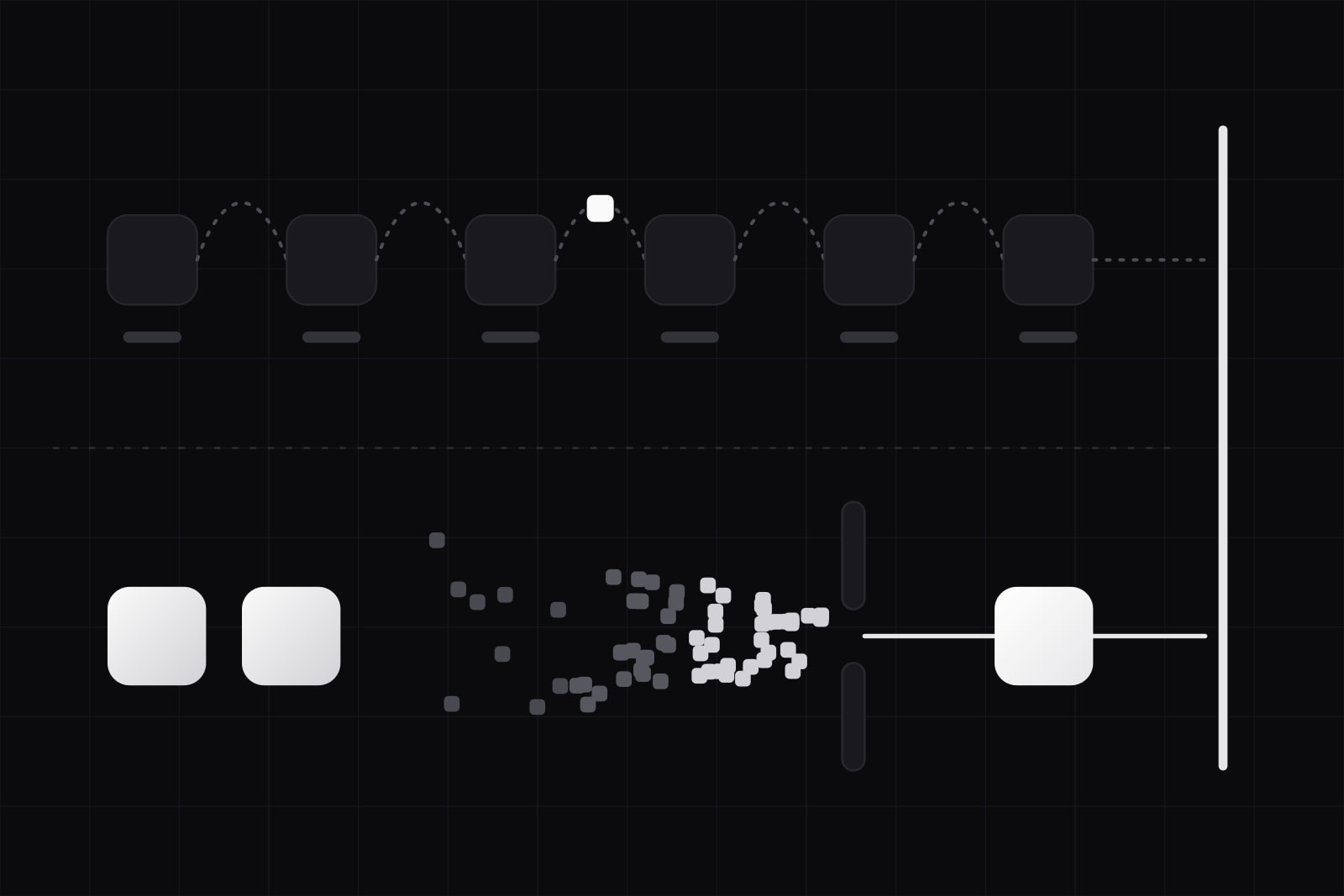
An AI-native studio is a small team that builds software with AI agents inside every step of delivery, while a traditional agency staffs a project with a specialist per role and bills the time they spend. In 2026 the difference shows up first in the two numbers a buyer checks before anything else: what the build costs, and how long it takes to ship.
Both kinds of shop use AI now. Google's 2025 DORA research found that 90% of technology professionals use AI at work, for about two hours a day. So the useful question is no longer who uses it. It is where AI changes the price and the calendar of a project, and where it changes nothing at all. (A different question is whether the product you are buying should have AI inside it; we covered that in AI-native vs AI bolted-on.)
The short answer
Pick an AI-native studio when the work is one product, designed and built by the same few people, with decisions made quickly by a small group on your side. That is where AI speed turns into calendar time and a lower bill.
Pick a traditional agency when the brief needs many people working in parallel, formal procurement, or long work inside a large legacy system. There, the limit is coordination and review, and faster code generation does not move it.
Side by side: what changes and what does not
- Pricing unit. Agency: hours or days per role, often a monthly team rate. AI-native studio: a fixed scope, a sprint or an outcome, because hours stop tracking the work once agents draft part of it.
- Team shape. Agency: one person per discipline, with a project manager between them. Studio: a handful of people, each covering more than one discipline, with agents doing the repetitive part.
- Where the time goes. Agency: handoffs between roles, and between the agency and you. Studio: reviewing what the agents produce, and deciding things with you.
- Speed on new code. Faster in both when AI is used well. The gap depends on how much of your project is new code.
- Speed on a large existing codebase. Close to even. The research below shows AI can slow experienced developers down here.
- Parallel capacity. Agency: high, it can add ten people next month. Studio: capped by how many people can review.
- Key-person risk. Agency: spread across a bench. Studio: concentrated in a few people, offset by shorter feedback loops.
Does AI actually make software delivery faster?
It depends on which step is the slowest, and the best studies disagree for exactly that reason.
On a bounded task, the gain is large. In a controlled experiment, developers with GitHub Copilot built an HTTP server in JavaScript 55.8% faster than a control group without it (Peng et al., 2023). New code, a clear spec, no history to respect.
On mature code, the result flips. METR ran a randomized trial with 16 experienced open-source developers on 246 real tasks, in repositories they had contributed to for years. When AI tools were allowed, they took 19% longer. They had expected to be 24% faster. After the study, they still believed they had been 20% faster.
At team level, the gain moves the queue. Faros AI's telemetry across more than 10,000 developers found that on teams with high AI adoption, developers complete 21% more tasks and merge 98% more pull requests, while review time rises 91%. Throughput at company level stayed flat: the extra code waited in front of the same reviewers.
Developers know the output needs checking. In the 2025 Stack Overflow survey, 46% of developers said they distrust the accuracy of AI tools, and 33% said they trust it. DORA puts the pattern in one line: AI amplifies the team that is already there, strong or weak.
For a buyer, the reading is plain. AI speed reaches your calendar only when writing code is the slowest step. A first version of a product, a redesign on a fresh codebase, a migration with a clear target: those qualify. When the slowest step is a decision on your side, a security review or knowledge of a ten-year-old system, a faster keyboard changes little.
Where does the cost difference come from?
An hourly bill should shrink when AI cuts hours. Whether it does depends on the contract. Under time and materials, the saved hours belong to whoever controls the timesheet. Under a fixed scope, the vendor keeps the saving and carries the risk if the estimate was wrong. That tension is pushing large firms off the hour: McKinsey said in late 2025 that about a quarter of its global fees now come from outcome-based pricing.
The bigger saving in a small AI-native team is coordination, more than typing speed. Fred Brooks counted it in The Mythical Man-Month: a team of n people has n(n-1)/2 lines of communication. Five people have 10. Twelve people have 66. Each line is a meeting, a handoff or a misunderstanding that someone pays for. AI lets a small team cover work that used to need more roles, so the team stays at five and the count stays at 10.
The saving has a floor. Agents write drafts; people read them. A team that ships agent output without review saves money on one release and spends it later on incidents. When you compare two quotes, compare the review step before the total.
Where an AI-native studio wins
- A first version on a new codebase. Most of the work is new code against a spec, the case where the studies show the largest gain.
- Design and build by the same people. A designer who also ships the front end with an agent removes a handoff, the step where a lot of rework starts.
- Short decision loops. If one founder or product owner decides, the studio can show working software every few days and change it the same week.
- A fixed budget. A small team prices a scope it can see whole, which suits a seed-stage budget. Our breakdown of what a SaaS costs to build in 2026 gives the ranges by scope.
Where a traditional agency wins
- Many workstreams by a fixed date. A launch that needs a web app, two native apps, a marketing site and campaign assets at the same time needs people in parallel. Review capacity sets the ceiling, and an agency has more reviewers.
- Large legacy systems. The METR result is the warning: on mature, complex code, experienced developers with AI were slower. The value sits in knowing the system, and a large bench can hold that knowledge across several people.
- Procurement and continuity requirements. Public tenders, bank vendor checks and round-the-clock support rotas ask for headcount, insurance and certifications that a team of five may not carry.
- Volume production. Hundreds of localized campaign assets a month is a staffing problem with a process around it, and agencies are built for that.
How do you check an "AI-native" claim in a proposal?
The label costs nothing to put on a website. Five questions separate a working method from a slogan:
- Who reads the code the agents write, and when? The answer you want is a named person who reviews every change before it merges. "Our AI checks it" is a different answer.
- What is priced: hours, a scope or an outcome? If the price is hourly, ask what happens to the hours AI saves.
- Which models see your code and data, and on what terms? Ask for the providers by name, and whether their business terms exclude training on your data.
- How do they measure speed? Time from a decided change to production is the number that matters. Lines of code and tickets closed measure activity.
- What did the first month of their last project look like? Working software on a staging address in the first weeks is a good sign. A month of documents is the old process with a new label.
A vendor that answers all five clearly has earned the label, studio or agency. Some agencies run AI-native teams inside a larger structure, and the same five questions apply to them.
Where we stand
We are a small AI-native studio, so read this section with that in mind. We design and build with Claude Code in the loop every day, and a person reads every change an agent drafts before it ships; we wrote up the workflow patterns we use. We take briefs where one team owns one product and stays on it after launch. When a brief needs ten people in parallel by a fixed date, we say so on the first call, because that is agency work.
The same choice has two neighbours worth reading before you sign: the contract model, in fixed scope vs retainer for a SaaS build, and team size on its own, in small studio vs big agency for SaaS.
Sources
- Google Cloud: Announcing the 2025 DORA Report, State of AI-assisted Software Development
- Peng, Kalliamvakou, Cihon, Demirer: The Impact of AI on Developer Productivity, Evidence from GitHub Copilot (arXiv, 2023)
- METR: Measuring the Impact of Early-2025 AI on Experienced Open-Source Developer Productivity (July 2025)
- Faros AI: The AI Productivity Paradox, telemetry from 10,000 developers (2025)
- Stack Overflow Developer Survey 2025: AI
- Business Insider via Yahoo Finance: AI is reshaping how McKinsey makes money (2025)
- U.S. Copyright Office: Copyright and Artificial Intelligence, Part 2: Copyrightability (2025)
Frequently asked questions
For a defined first version of a product, often yes, because fewer people and fewer handoffs mean fewer paid hours of coordination. It is not automatic. A studio that prices by the hour can still bill the hours AI saved, and an agency on a fixed scope can be cheaper than a studio that underestimates. Compare quotes line by line: what is in scope, who reviews the code, and what happens when the scope changes.
It is as safe as the review process around it. Agent-written code goes through the same gates as any other code: a person reads the change, tests run on every merge, and dependency and secret scanning run in the pipeline. The 2025 Stack Overflow survey found that more developers distrust AI accuracy than trust it, which is the right default. Ask a vendor to show you a merged change with its review, not to describe their process.
Ownership between you and the vendor is set by the contract, so it should assign you all rights in the deliverables, whoever or whatever drafted them. Copyright in the AI-written parts is a separate question. In the United States, the Copyright Office's 2025 report says material generated by AI without sufficient human control is not protected, while human selection, arrangement and modification can be. Rules differ by country, so a lawyer should read the IP clause before you sign.
Yes, because AI-native describes a delivery method rather than a company size. What changes is the shape of the team: fewer roles per project, agents doing the repetitive part, and more of each person's time spent reviewing. The harder part is pricing, since an agency whose revenue is billed hours earns less when the hours drop. An agency that has moved to fixed-scope or outcome pricing has usually changed the method underneath as well.
Related services
Related articles
Business AI
What is a Claude Code studio in 2026 (and how to pick one)
A Claude Code studio builds production software using Claude as the execution layer. We define the label and show how to verify a real one before you sign. Business