
 Infra
Why is my organic traffic dropping? 7 causes when nothing changed
Seven causes behind an organic traffic drop when nothing changed on your site, four of which never touch rankings, and a 30-minute check to find yours.
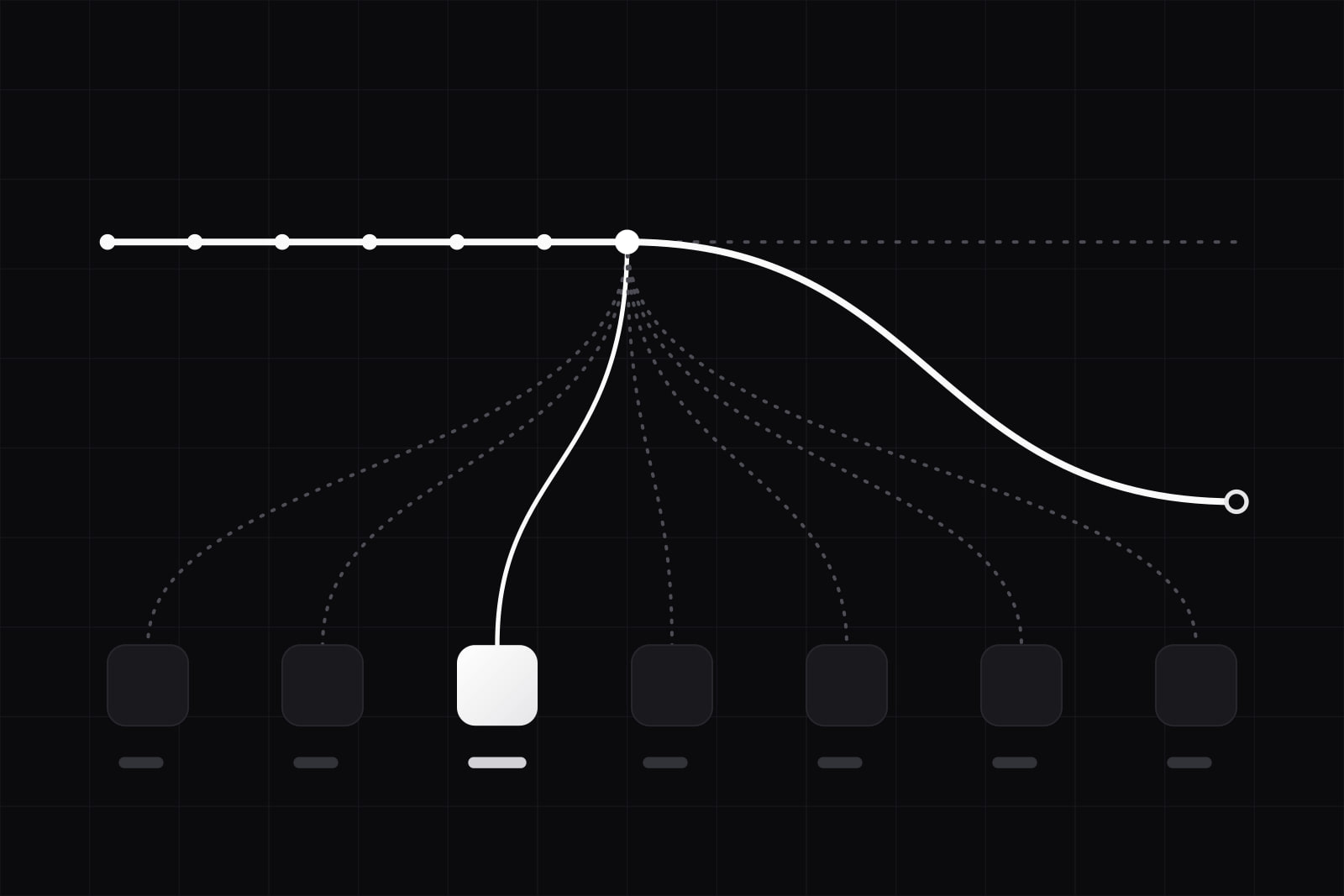
An organic traffic drop when nothing changed is a fall in Google clicks, or in the sessions your analytics records, whose cause sits outside your last deploy. In 2026 there are seven usual causes. Four of them never touch your rankings: a tracking change, a Search Console reporting change, AI answers absorbing the click, and lower seasonal demand. The other three are a Google update, a competitor publishing a better page, and a technical change that happened without anyone shipping it.
The question "why is my organic traffic dropping" usually comes from a founder or a marketing lead looking at a chart, and the right fix depends on which of the seven it is. A wrong diagnosis costs real time: a team rewrites pages that were fine, or waits out a problem that one line in robots.txt would solve. Google's own guide to debugging drops in Search traffic starts from the shape of the graph. So do we.
Is the traffic gone, or only the measurement?
Compare two numbers that are counted in different places. Search Console counts clicks on Google's servers. Google Analytics 4 counts sessions in the visitor's browser, and only when its script loads and the visitor's consent allows it. If Search Console clicks are flat and GA4 organic sessions fell, the visitors are still arriving. Your analytics stopped seeing them.
The usual triggers are a new cookie banner, a consent setting changed when someone restyled the banner, a tag manager container republished without the GA4 tag, or a content security policy that now blocks the script. A measurement loss has a signature: a vertical step on one day, then a flat new plateau. Ranking losses slope.
Did Search Console change how it counts?
Search Console moves its own baseline from time to time, and every chart that starts before the change shows it as a drop.
- September 2025. Google stopped honouring the
num=100parameter that rank trackers used to load 100 results on one page. Those scraped pages had been counted as impressions. In Tyler Gargula's analysis of 319 properties, 87.7% of sites lost impressions and 77.6% lost unique queries, while average position improved. Clicks barely moved, because bots never clicked. - June 2026. Google launched the Search Generative AI performance reports, rolled out to every site by 31 August 2026. Impressions inside AI Overviews and AI Mode stay in the overall Performance report; the new view shows them on their own.
- Any month. Logging errors. Google lists them on the Search Console data anomalies page, and its debugging guide names a reporting glitch as one of the four graph shapes worth recognising.
If impressions dropped and clicks held, read the dates before you read anything else.
Are AI Overviews taking the click?
This is the cause that matches "nothing changed" most often. The page keeps its position. Impressions hold, or grow. Clicks fall, because the answer now sits above the results. In Pew Research Center's analysis of the March 2025 browsing data of 900 US adults, users clicked a traditional result on 8% of visits to a search page with an AI summary, against 15% without one. They clicked a link inside the summary on 1% of visits, and ended the browsing session on 26% of pages with a summary, against 16% without.
Definition and how-to queries take the hardest hit, because a summary can answer them in full. To confirm it, filter the Performance report to the queries that lost clicks and compare click-through rate before and after, with position steady. Then open the generative AI report to see which of your pages already appear inside AI features. The response is the work in how to get cited in Google AI Overviews and ChatGPT: a cited page keeps a share of the remaining clicks, and the reader meets your name even when they never click.
Was there a Google update in the window?
Lay the date the curve bent over the Google Search Status Dashboard. For 2026 it lists two core updates (27 March, running 12 days; 21 May, running 11 days and 21 hours) and four spam updates (24 March, 24 June, 18 August and 24 September, the last one running 13 days and 16 hours). A drop that starts inside one of those windows and spreads across many pages points at the update.
Google's guide separates two cases. A small drop in position, say from 2 to 4, is ordinary movement and can reverse on its own; Google advises against radical changes to pages that already perform well. A large drop, say from the top 10 to position 29 across a wide range of queries, calls for an honest review of the whole site. Recovery can take months, because Google's systems reassess a site over time. A core update sends no notice and has no single fix. A spam problem can come with a manual action, which you would see in the Manual actions report.
Did demand fall, or only your share of it?
Search volume moves with the calendar. A B2B tool loses visits every August in much of Europe. A tax guide peaks once a year. Take the five queries that lost the most clicks and open each one in Google Trends for the same period. If the Trends curve falls in step with yours, the market went quiet and your share held. For anything seasonal, compare year on year, never month on month.
Demand can also shift for good. A product gets renamed, a framework gets replaced, a regulation comes into force, and the query that brought traffic last year has fewer people typing it. That calls for new content on the new term. There is nothing to repair.
Did someone publish a better answer?
Positions move because the web moves. A page you published 18 months ago now competes with pages written last week, with fresher data and newer examples. This drop is slow: a few positions a quarter, page by page, with no cliff. Search the query in a private window and read what ranks above you now. If their answer is more current or more specific, the fix is a real update of your page: new data, new examples, every source checked again. The routine we follow is the 90-day freshness rule. A new date on unchanged content does nothing.
Did something change without a deploy?
"Nothing changed" usually means nobody shipped code. Plenty changes without a deploy:
- A CMS or plugin auto-update that adds
noindexto a template or rewrites canonical tags. - A CDN or firewall rule that starts challenging Googlebot. We covered one common case in Cloudflare's default bot settings.
- An expired TLS certificate, a missed domain renewal, a DNS record edited by someone else in the company.
- A robots.txt that answers with a server error. Google's robots.txt documentation says that when the file returns a 5xx, Google stops crawling the whole site for the first 12 hours.
- A compromised page injecting spam, which Search Console flags in the Security issues report.
A site-wide problem draws a vertical drop. A page-level one draws a gradual line, because a stray noindex only bites as Google recrawls each page. The Crawl stats and Page indexing reports show the matching spike. If the drop followed a redesign or a migration, the checklist is in why a site disappears from Google after a redesign.
How do I tell which cause it is in 30 minutes?
- Compare Search Console clicks with GA4 organic sessions over the same 90 days. Flat clicks with falling sessions means measurement.
- Read impressions and clicks separately. Impressions down with clicks steady means a reporting change. Impressions and position steady with clicks down means AI answers, or a results page that changed shape.
- Find the day the curve bent and check it against the Search Status Dashboard and the Search Console data anomalies page.
- Open Google Trends for the five queries that lost the most clicks, year on year.
- Open Page indexing, Crawl stats, Manual actions and Security issues. A spike in any of them outranks every other theory.
- Search the losing queries in a private window and read who ranks above you now.
The order matters. The first two steps rule out the four causes that need no SEO work at all, and they take ten minutes.
What this looks like in practice
An illustrative example, with round numbers. A guide page shows, month on month in Search Console: impressions from 12,000 to 12,400, average position from 3.1 to 3.0, clicks from 480 to 260. Click-through rate fell from 4% to 2.1% while the page held its rank. A search for its top query shows an AI Overview answering it in four lines. That is the AI cause. The useful work is to earn the citation, and to give the page something a summary cannot carry: a calculator, a template, a dataset. Rewriting the page to win back a position it never lost would take a week and change nothing.
Sources
- Google Search Central: Debugging drops in Google Search traffic
- Pew Research Center: Google users are less likely to click on links when an AI summary appears in the results (July 2025)
- Search Engine Land: 77% of sites lost keyword visibility after Google removed num=100
- Google Search Central Blog: Introducing Search Generative AI performance reports in Search Console (June 2026)
- Google Search Status Dashboard: ranking update history
- Google Search Central: How Google interprets the robots.txt specification
- Google Search Central: AI features and your website
- Google Search Central: Google Search core updates
Frequently asked questions
Google does not publish a threshold, and week-to-week swings of a few percent are normal noise from holidays, news cycles and ranking movement. Our working rule is to compare the same weeks year on year and to act when clicks stay below that baseline for three weeks in a row, or when a single day shows a vertical step. A step points at measurement, reporting or a technical fault, and those are worth checking the same day. A slow slide over a quarter usually means competitors or decay, and it rewards a planned content update more than an emergency.
Usually not. Google's only explicit penalty is a manual action, and it always appears in the Manual actions report in Search Console with the reason and the affected pages. A core update is a reassessment of how pages rank against each other, so pages can lose positions without any rule being broken, and there is nothing to appeal. Spam updates are automated and send no notice, but they target practices listed in Google's spam policies, which most business sites never use. If the Manual actions and Security issues reports are both empty, look at the other causes first.
Google gives no fixed timeline. Its guidance says some changes take effect within days while others take several months, because its systems need time to reassess a site as a whole. Google adds that if nothing has moved after a few months, the effect may wait for the next core update; in 2026 those came in March and May, roughly two months apart. Small position drops often reverse without any action. Large drops across the whole site recover only after the content itself improves, and Google states that there is no guarantee of recovery even then.
You can limit it, at a cost. Google's documentation says the controls for AI features in Search are the same preview controls used for ordinary results: nosnippet, data-nosnippet, max-snippet and noindex. Using them also shrinks or removes your snippet in the classic results, which tends to lower click-through rate there too. Blocking Google-Extended does not remove a page from AI Overviews, because that token governs other Google AI systems. For most sites, earning the citation is the better trade, and a page with a tool or dataset a summary cannot reproduce keeps its reason to be clicked.
Related articles
Infra Web
Why is my website slow? The 6 causes and what fixes each
Only 48% of mobile sites pass Core Web Vitals. The six causes of a slow website, how to find yours in PageSpeed Insights, and what fixes each one. Infra