
 Infra
ChatGPT sidebar citations: how to earn the 6-10% CTR placement
In a leaked OpenAI report, ChatGPT sidebar and citation links drew 6-10% CTR while main-answer links got almost none. Seven steps to structure pages for them.
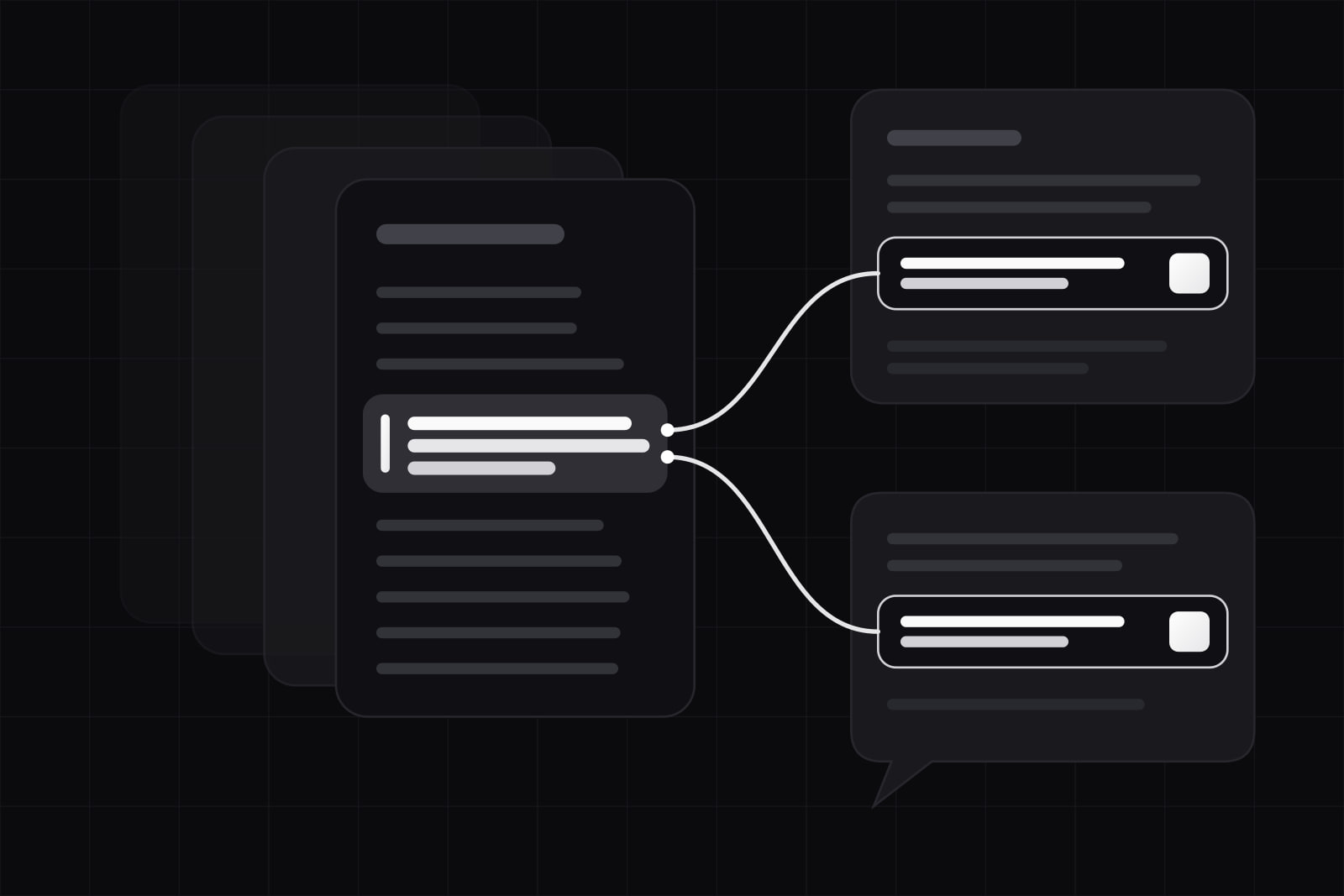
A ChatGPT sidebar citation is a link to your page shown in the sources panel or the citation list beside an answer, and it is where ChatGPT's clicks happen. In a leaked OpenAI partner report, links inside the main answer collected huge impressions and almost no clicks, while sidebar and citation links drew a click-through rate between 6% and 10%. By the end of this guide you will have a page that OpenAI's search crawler can read, that answers its question where ChatGPT looks first, and that gives a reader a reason to open the source.
Why the sidebar is where the clicks are
The numbers come from a confidential OpenAI report shared with a small group of publishers, which Vincent Terrasi reviewed and described for Search Engine Journal. Search Engine Land's summary gives the scale: the best page in the file had 610,775 link impressions and 4,238 clicks, an overall CTR of 0.69%. Most other pages sat at 0.1%, 0.01% or zero.
The split by placement explains it. A link inside the main answer is seen by everyone who reads the answer, and the answer has already done the work, so few people leave. A link in the sidebar or the citation list is seen by fewer people, but they open it on purpose: they want the detail, the proof or the next step. That is where the 6% to 10% sits.
Two limits before building on it. The figures describe one leaked dataset from one set of publishers, not a published benchmark. And nobody outside OpenAI picks the placement: the model decides which retrieved pages it cites and where. What you control is whether your page is retrieved, whether it is chosen from the pool, and what the reader finds after the click. Google shows the same pattern from the other side: in Seer Interactive's study of 3,119 queries, brands cited in an AI Overview earned 35% more organic clicks than brands left out.
What you need before starting
- Access to
robots.txtand to the CDN or firewall rules in front of the site. - One page that targets one question a buyer or practitioner would type into ChatGPT.
- Analytics that can split visits by source, such as GA4, Plausible or server logs.
- An hour to rewrite the top of the page and its headings.
Step 1: Let OAI-SearchBot read the page
ChatGPT search can only cite what it can retrieve. OpenAI runs two crawlers with separate controls: OAI-SearchBot surfaces pages in ChatGPT search, and GPTBot collects data for model training. OpenAI's crawler documentation says a site can allow the first and block the second, and that sites opted out of OAI-SearchBot are not shown in ChatGPT search answers. Check three places: the User-agent: OAI-SearchBot rules in robots.txt, the bot-management setting at the CDN, and any firewall rule that challenges unknown agents. We covered the Cloudflare case in how to unblock AI crawlers without breaking security.
Step 2: Answer the question in the first 30% of the page
Retrieval is not citation. AirOps tracked 548,534 pages that ChatGPT retrieved across 15,000 prompts and found that only 15% were cited in the final answer. The other 85% were read and dropped. Where the answer sits on the page decides part of that.
Kevin Indig's analysis of ChatGPT citations found that 44.2% of cited passages come from the first 30% of a page, 31.1% from the middle and 24.7% from the last third. He calls the shape a ski ramp. So open with the answer: one sentence that defines the subject, one that says who it matters to, and the number or condition that makes it concrete. History, context and caveats come after. We go through the exact shape in how to write the first 200 tokens so AI engines cite you.
Step 3: Write each H2 as the question it answers
In the same dataset, cited text was twice as likely to contain a question mark (18% against 8.9%), and 78.4% of those cited questions sat in headings. The model treats an H2 like a prompt and the paragraph under it like the reply. A heading such as "The history of SEO" gives it nothing to match. "When did SEO start?" followed by "SEO started in…" gives it a question and an answer it can lift whole.
Write the H2 in the words a person types into ChatGPT. Then make the first sentence below it answer that question and repeat its subject. Indig calls this entity echoing: the heading asks about SEO, and the first word of the answer is SEO. Keep declarative headings for sections that argue rather than answer.
Step 4: State facts in X is Y sentences
Cited passages were almost twice as likely to use definitive phrasing such as "is defined as" or "refers to": 36.2% of them against 20.2% of the rest. A sentence shaped "X is Y" resolves a "what is X" prompt on its own, so the model can quote it without stitching three paragraphs together. Replace "In a fast-moving market, automation is becoming important" with "Demo automation is software that runs a product demo without a salesperson." Cut the hedges (might, perhaps, arguably) from any sentence you want quoted.
Step 5: Name the tools, standards and numbers
Indig measured an entity density of 20.6% in heavily cited text, against roughly 5% to 8% in ordinary English. Entities are proper nouns: products, companies, standards, people. "There are many good tools for this" has none. "Teams use Salesforce, HubSpot or Pipedrive" has three, and the model can check each one. Numbers work the same way. A second AirOps report, covering 217,508 pages retrieved for 7,500 commercial prompts, found that early-discovery pages with 5 to 7 statistics were 20.3% more likely to be cited. Link each statistic to its source at the claim. Citations and statistics were also among the strongest levers in the Princeton GEO study.
Step 6: Keep one page on one question
A page that tries to answer every related question loses to a page that answers one well. In the commercial AirOps data, awareness-stage pages between 1,301 and 1,500 words were 10.8% more likely to be cited, pages with 7 to 26 list sections were 6% to 15.2% more likely, and pages averaging 11 to 14 words per sentence gained about 7%. None of these is a target to hit. Together they describe a page short enough to stay on topic and broken into pieces a model can extract. If your guide covers five questions, split it into five pages and link them.
Step 7: Put on the page what the answer cannot carry
The sidebar click comes from someone who has already read ChatGPT's summary. If the page only repeats the summary, the click is wasted and the reader leaves. Give them what a chat answer compresses or drops: the full price table, the worked example with real numbers, the code that runs, the checklist they can copy, the original data behind the claim. Show it in the first screen, so a reader arriving from the sidebar sees in seconds that the page holds more than the answer did. This step is our reading of the placement data, not a measured result. The 6% to 10% comes from readers who wanted more, so the page has to have more.
How to check it worked
- Run the target question in ChatGPT with search on, from a logged-out window and a logged-in one, and note whether your page appears inline, in the sources panel or not at all. Repeat weekly: answers vary between runs.
- Filter analytics for visits tagged
utm_source=chatgpt.comand for the chatgpt.com referrer. Some clicks arrive with neither and show up as direct traffic, so treat the number as a floor. - Check server logs for OAI-SearchBot requests to the page after each change.
- Track citation rate and position over a fixed set of prompts, as described in our guide to GEO KPIs.
Common failures and fixes
- The page is never cited. Check retrieval first: OAI-SearchBot blocked, a challenge page served to bots, or text rendered only in the browser. Serve the text in the HTML.
- The page is cited inline but nobody clicks. The answer gave the reader everything they needed. Add something the summary cannot reproduce (Step 7).
- A competitor is cited for your topic. Compare the first 30% of both pages. See which one answers sooner and names more specifics: those are the two gaps to close.
- Citations come and go. That is normal. Measure over a set of prompts and several weeks, never one screenshot.
Going further
For the wider playbook across Google and ChatGPT, read how to get cited in Google AI Overviews and ChatGPT. For why mentions off your site matter as much as the structure on it, see brand mentions vs backlinks. For what the traffic is worth once it arrives, see why AI search traffic converts better.
Sources
- Search Engine Land: Most ChatGPT links get 0% CTR, even highly visible ones
- Search Engine Journal: Inside ChatGPT's confidential report visibility metrics (Vincent Terrasi)
- Search Engine Journal: The science of how AI pays attention (Kevin Indig)
- AirOps: The influence of retrieval, fan-out and Google SERPs on ChatGPT citations
- AirOps: From retrieved to cited, how commercial content earns citations in AI search
- Seer Interactive: AIO impact on Google CTR, September 2025 update
- OpenAI: Overview of OpenAI crawlers
- Aggarwal et al.: GEO, Generative Engine Optimization (KDD 2024)
Frequently asked questions
It is the best public signal so far, not a benchmark. It comes from one confidential OpenAI partner report covering a set of publisher URLs, reviewed by Vincent Terrasi and reported at the end of 2025. Your own rate will depend on the topic, the type of question and whether the answer already satisfied the reader. Use it as a direction: placements outside the main answer turn attention into clicks far better than the answer itself. Measure your own rate by pairing weekly citation checks with ChatGPT visits in analytics.
The on-page part mostly carries over. An answer in the first lines, question-shaped headings, named entities and cited statistics are the levers the Princeton GEO study tested across generative engines in general, not ChatGPT alone. Retrieval is where the engines differ. Google AI Overviews draw on Google's index, so the page has to be indexed and ranking; Perplexity reads the web with its own crawler, PerplexityBot; ChatGPT search depends on OAI-SearchBot. Check that each crawler can reach the page before judging the structure.
A robots.txt change is the fast part: OpenAI says its search systems take about 24 hours to adjust after a site updates robots.txt. A content change has to be recrawled first, and OpenAI publishes no recrawl schedule. Watch server logs for an OAI-SearchBot request to the page, then run your prompt set again. Judge the result over several weeks, because the same prompt can cite different sources from one run to the next.
Blocking GPTBot does not remove you from ChatGPT search. OpenAI treats the two crawlers as independent settings: GPTBot gathers content that may be used to train its models, OAI-SearchBot surfaces pages in search answers. You can disallow the first and allow the second. The trade-off is that content kept out of training cannot shape what the model says when it answers without searching, so the choice depends on how you weigh that against keeping your content out of training data.
Related articles
Infra Infra
The 12 GEO best practices that actually move citation rates in 2026
Twelve GEO practices we apply on every article, with the measured lift from Princeton, Averi, and Search Engine Land citation benchmarks. Infra