 Design
Design system pricing in 2026: project, retainer, or shared ownership
A design system costs $5,000 to $60,000+ to build, then needs upkeep. We compare project, retainer, and shared-ownership pricing, and which fits your stage.
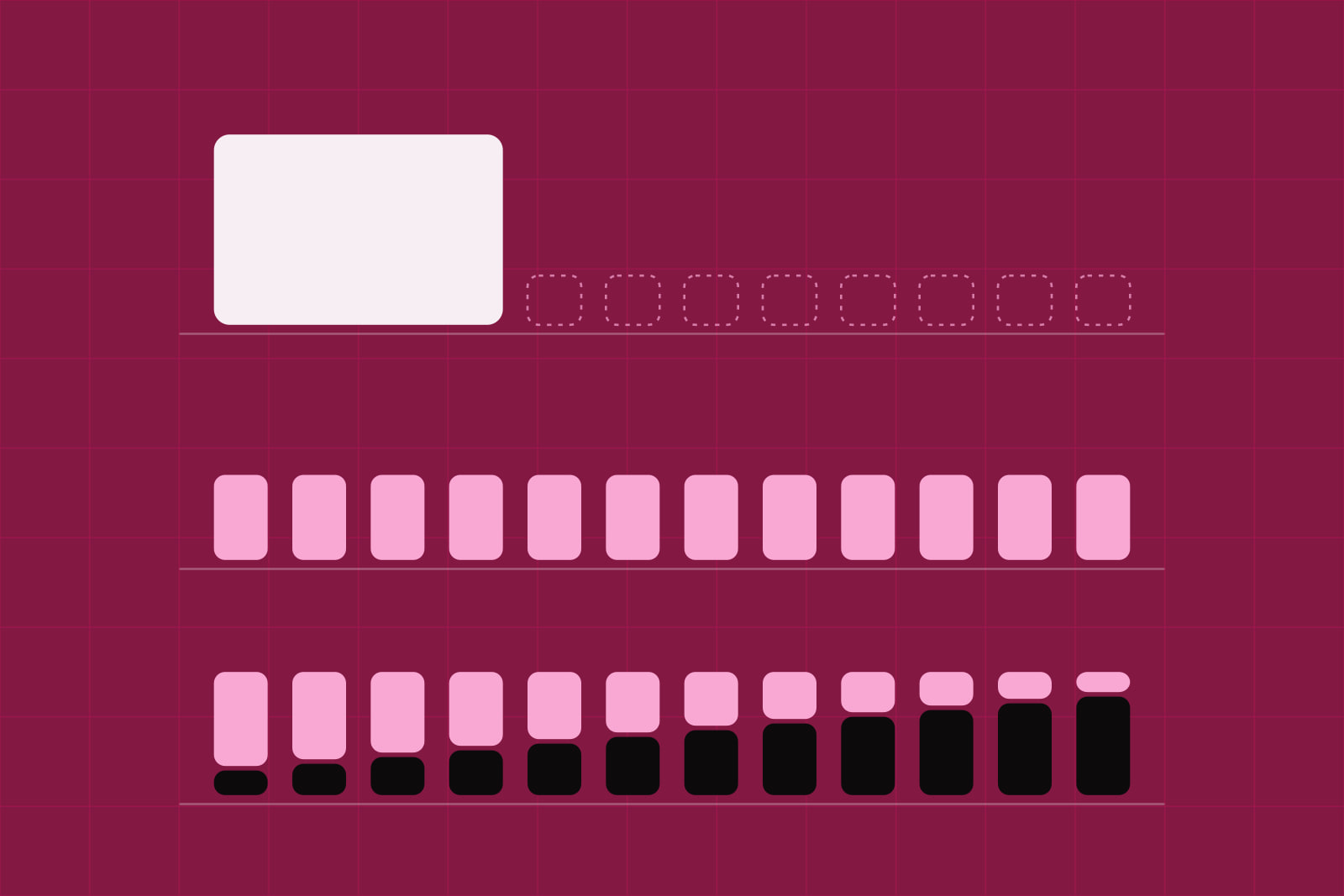
Design system pricing in 2026 comes in three shapes: a fixed-scope project, a monthly retainer, or a shared-ownership model that splits the build from the upkeep. The right one depends less on your budget and more on a single question: who owns the system after it ships.
Here is the short version. A fixed-scope project fits a one-time build you plan to run yourself. A retainer fits a system that keeps growing and that you would rather not staff internally. Shared ownership fits a team that wants the system built fast but intends to run it in-house within a year. Get that call wrong and you either pay for maintenance you do not need, or inherit a system nobody is left to tend.
What a design system actually costs to build
Before comparing models, the raw build number. Across agency and studio quotes in 2026, a design system runs three tiers:
- Starter, $5,000 to $10,000. A core library of 30 to 50 components, one platform, a basic token layer. Enough for an early-stage product with one or two designers.
- Growth, $10,000 to $25,000. 60 to 100 components, a full token architecture, documentation, and Figma-to-code parity. The range most Series A SaaS companies land in.
- Enterprise, $25,000 to $60,000 and up. Multi-brand support, more than 100 components, code integration, Storybook, a governance framework, and team training. Timelines run 12 to 20 weeks, per current industry estimates.
Freelancers quote lower, roughly $5,000 to $20,000 for comparable scope, and trade the lower price for a single point of failure and no continuity. Those numbers cover the build. They say nothing about the part that decides whether the money was well spent: what happens after launch.
The three pricing models, side by side
Same build, three ways to pay for it and to keep it alive.
| Axis | Fixed-scope project | Retainer | Shared ownership |
|---|---|---|---|
| How you pay | One price, milestone-based | Monthly fee, $2,000 to $30,000 | Project fee plus a lighter transition retainer |
| Best for | A defined build you will run yourself | A system that keeps changing | A team that wants to own it within a year |
| Who tends it after launch | You | The external team | You, with a documented handoff |
| Time to start | 4 to 8 weeks of scoping first | 3 to 5 days | Project scoping, then continuous |
| Main risk | Drift once the contract ends | Paying for quiet months | A bad handoff leaves a gap |
| Typical first-year cost | $10k to $60k once | $24k to $120k+ | Build cost plus 3 to 6 months of retainer |
Where a fixed-scope project wins
A fixed-scope project is one price for a defined build. You approve a component list, a token architecture, and a documentation set, and the system is yours when it ships. It is the cleanest model when the scope is clear and you have someone in-house who can maintain the result.
It is also the cheapest on paper, and that is the trap. The moment the contract ends, the system starts to drift. Spacing, type, and component states diverge across teams, and the gap between the intended UI and the shipped UI widens. Ownership ambiguity is one of the most common reasons design systems stall: when no one is accountable for evolution, standards slip and adoption slows. A fixed-scope project only works if you already know who owns it on day 91.
Where a retainer wins
A retainer is a monthly fee for an ongoing team that builds and tends the system. Design-as-a-service providers typically start work within three to five business days, against the four to eight weeks a traditional project spends on scoping and sign-off before a single component ships. Maintenance-only retainers run $2,000 to $5,000 a month; a full design retainer runs $3,000 to $30,000, driven by team size and cadence.
This model fits a system that keeps changing: new product surfaces, new brands, a component library that grows every sprint. You skip the cost and risk of a DesignOps hire and get continuity instead. The downside is arithmetic. Over twelve months a mid-range retainer costs $24,000 to $120,000 or more, and some of those months will see little change. If your system reaches a steady state, you are paying rent on a house you could own.
Where shared ownership wins
Shared ownership is the hybrid. An external team builds the system fast, then hands governance to your people through a lighter transition retainer. The build is quoted like a project. The transition covers documentation, contribution rules, a release process, and training, so your team can run the system without the original builders.
This fits the common case: you want the system live in weeks, not months, but you intend to own it within a year. It caps the endless-retainer cost and closes the drift gap that kills fixed-scope builds, because the handoff is a deliverable, not an afterthought. It asks one thing of you: an internal owner who takes the keys. Without that person, shared ownership collapses back into a fixed-scope project with a nicer exit.
The number nobody quotes: maintenance
The build is the cheap part. A design system that gets built and then left alone drifts, bloats, and eventually gets replaced by another system that gets built and left alone. The pricing model you choose is really a maintenance decision wearing a budget costume.
The upside of tending it is large. One industry ROI model reports design teams gaining about 38% in efficiency and development teams about 31% once a maintained system is in place, with annual savings estimated near $102,600 per designer. Those numbers assume the system stays current. Skip the maintenance and they evaporate. For the full economic case, read the design system as a P&L line item.
How to choose in one question
Skip the pricing tables for a second and answer this: do you have someone internal who will own the system a year from now? If yes, buy a fixed-scope build and hold a short transition retainer to hand it over cleanly. If no, and you never will, a retainer is honest about the ongoing cost, so pay it. If the answer is "not yet, but we plan to hire," shared ownership buys you speed now and an exit later. The wrong move is to pick on sticker price, because the cheapest quote is almost always the one that hides the maintenance you will pay anyway.
What we do and why
We quote the build as a fixed-scope project, so you know the number before you commit. Then we offer a short transition retainer, usually three to six months, to set up governance and hand the system to your team. If you would rather not run it at all, we keep a maintenance retainer and tend it ourselves. What we do not do is sell an open-ended retainer to a team that wants to own its own system. Shared ownership is the default we reach for, because it is the model that leaves you with a system you control and a bill that stops. For a wider look at engagement models, see our comparison of six design-system-as-a-service agency models.
Sources
Frequently asked questions
A maintenance-only retainer runs about $2,000 to $5,000 a month. A full design retainer, where the team keeps building as well as tending, runs $3,000 to $30,000, driven by team size and how often you ship. The lower end covers a system in a steady state with occasional fixes; the higher end covers active development across multiple product surfaces. Ask what cadence the fee assumes before you sign, because a retainer priced for weekly releases is wasted on a system that changes twice a quarter.
In-house is cheaper only if you already have the people to run it. A full-time senior designer costs $70,000 to $130,000 in salary, and roughly 1.4 times that once you add taxes, benefits, and tools. A one-time agency build of $10,000 to $60,000 is far less capital up front. The real comparison is not build cost, it is who maintains the system for the next three years. If you have an internal owner, in-house wins over time. If you do not, an external build plus a maintenance retainer is cheaper than a bad hire.
Yes, and that switch is exactly what shared ownership formalizes. The clean way to do it is to agree on the handoff before you start: what documentation, contribution rules, and release process the external team will leave behind, and who on your side takes over. Without that agreement, a retainer can quietly become permanent, because the system stays legible only to the people paid to touch it. Put a transition clause in the contract from day one, even if you do not exercise it for a year.
Three things. Maintenance, the recurring cost that dwarfs the build over a few years. Accessibility, which is cheap when built in and expensive when retrofitted after an audit. And adoption work, the internal training and documentation that decide whether engineers actually use the system or route around it. A quote that lists only components and tokens is quoting the artifact, not the outcome. Ask what the price includes past the moment the system ships.
Related services
Related articles
Design Design
Brand motion design: how one easing curve sets a product's tone
Material 3 eases on cubic-bezier(0.2, 0, 0, 1), Carbon splits productive from expressive. How to pick one signature curve, test it and ship it as tokens. Design