
 Design
Design system as a service: 6 agency models compared in 2026
Design system as a service is an ongoing engagement: an agency builds, governs, and evolves your system instead of handing it off. Six models compared.
Design system as a service (DSaaS) is an ongoing engagement where an external team builds, governs, and evolves your design system as a continuous product, instead of delivering a Figma library and walking away. The model exists because a design system that ships in week 12 and gets no maintenance from week 13 onward decays within two quarters: components drift, tokens fragment, and the teams that should consume it stop opening the docs.
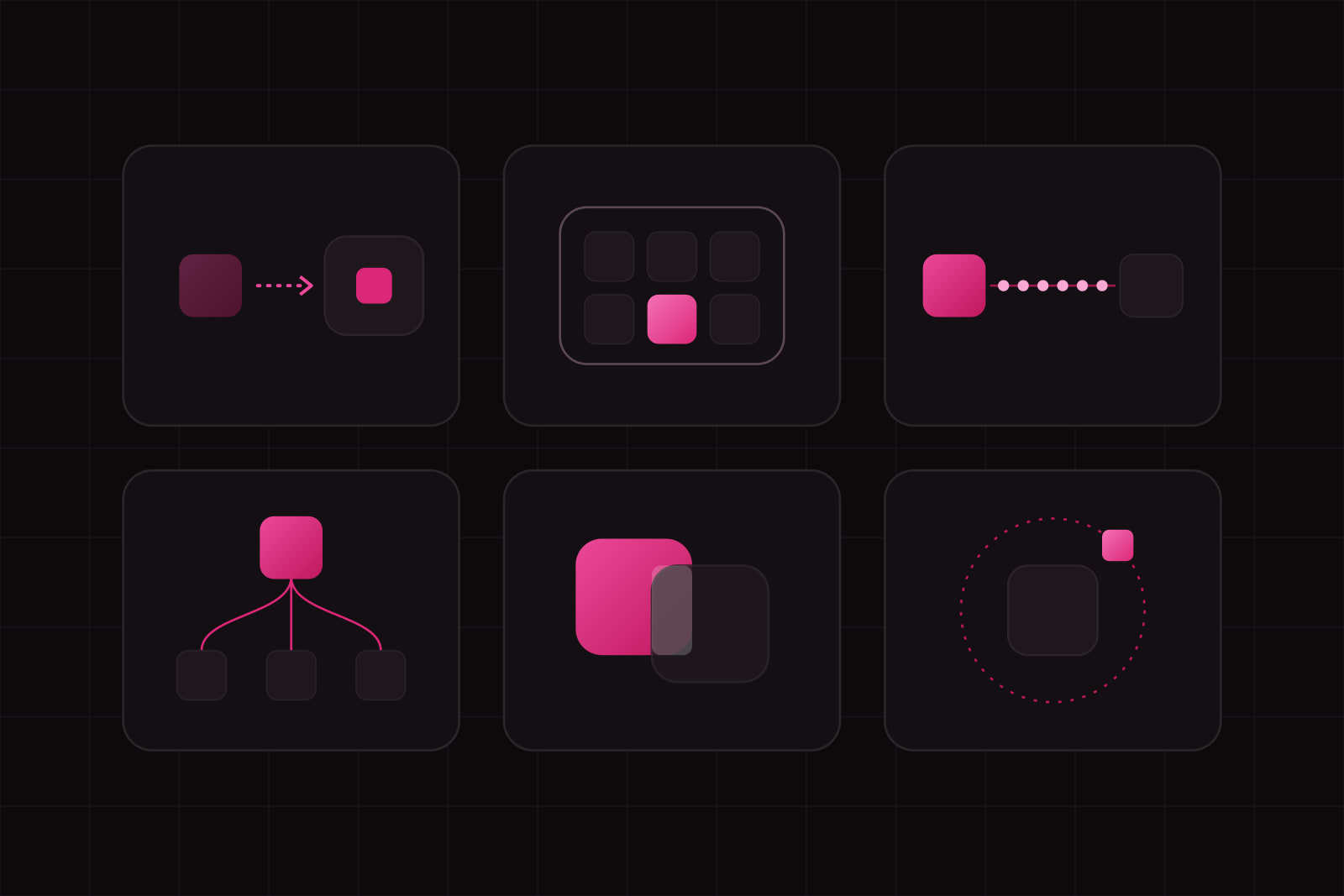
The 2026 market carries six distinct flavours of DSaaS. They share the recurring-engagement DNA, but they differ in how much your team owns at the end, how monthly capacity is measured, and where the agency makes its margin. Picking the wrong flavour costs more than picking the wrong agency.
The 30-second version
If your team will run the system in the medium term, pick a model where ownership transfers (1, 3, 4 below). If your team will not, pick one where the agency stays in charge (5, 6). The two classic mistakes: buying ownership transfer when you have nobody to receive it (you end up with a frozen library), and buying ongoing service when you actually had budget for a finite build (you pay forever).
What we measured
Each model below is rated on five axes that decide whether it fits a specific buyer.
- Who owns the system at the end. Does your team keep tokens, components, code, and Figma at the end of the engagement?
- Monthly capacity shape. Does the agency commit to a finite list, an unlimited queue, or a fixed monthly slot?
- Governance scope. Does the engagement include component owners, contribution rules, and CI checks, or only output?
- Cost shape. One-time, monthly retainer, embedded headcount, or hybrid.
- Exit cost. What you pay (in money or pain) to leave.
The 6 models, sorted by where ownership lands
1. Fixed-scope build
The classical engagement. You buy a defined system: tokens, a fixed component count, documentation, a Figma library, and code. Eight to sixteen weeks, fixed scope, fixed price. The Design System Guide benchmarks this model at USD 15k for a starter system and USD 150k+ for enterprise scope, with mid-market SaaS at Series A or B landing in the USD 30k to 70k range. At the end, you own everything and the agency leaves.
Fits: teams with a designer or front-end lead who will operate the system internally. Falls short for: teams without anyone to maintain it. Six months later the components drift, custom Figma overrides multiply, and the system is no longer a system. See our piece on 10 design system mistakes that wreck consistency at scale.
2. Audit and advisory retainer
Lighter weight. The agency does not build, it reviews. Monthly retainer of EUR 2k to 6k for a senior advisor on call, plus a quarterly audit pass. Useful when an internal team already owns the system and wants outside calibration on token drift, component coverage, and accessibility compliance. The deliverable is a written audit, not new components. See what a design system audit is for the inner loop of this work.
Fits: in-house design system teams of two to five people who need a second opinion. Falls short for: teams that do not have an internal owner yet. An advisor has no leverage when nobody on the inside makes decisions.
3. Embedded designer or design engineer
The agency places one or two people inside your team, full or part time, for a multi-quarter engagement. They build features and the system in the same pull requests. The handoff problem disappears because there is no handoff: the same person ships the component and the page that consumes it. Pricing in 2026 sits around EUR 8k to 18k per embedded person per month, depending on seniority. Industry retainer benchmarks for design agency engagements at this tier are USD 5k to 25k monthly for mid-market SaaS, with enterprise embedded engagements topping USD 50k.
Fits: Series B+ companies with product velocity but no in-house specialist for the system. Falls short for: early-stage teams that would be paying for senior capacity used 30% of the time.
4. Co-build with staged transfer
The agency and your in-house team build the system together for the first 12 to 24 weeks, then ownership transfers in stages. The agency stays on as governance partner for the next two quarters, at a reduced retainer. This matches what the governance literature calls the federated model: a central core team (initially the agency) and contributing product squads (your team), with named component owners and a Design Council.
Fits: mid-sized product teams ready to staff a small in-house design system squad, just not from day one. Falls short for: teams that want to never touch the system themselves. The transfer phase only works if your designers actually take the reins.
5. Unlimited-requests subscription
Monthly fee, fixed seat, unlimited requests, one or two active tasks at a time. Common in the 2026 design-subscription wave (Superside, Wavespace, Awesomic, and similar). Prices run USD 4,800 to USD 12,000 per month per active queue. The agency owns the SLA, but the assets live in your Figma. There is no governance, no contribution rules, no audit. Just throughput on the request queue.
Fits: startups with bursty design needs and no time to manage a vendor. Falls short for: companies that want a coherent system. The subscription queue produces design output, not a governed system. Over 12 months the work drifts because no one on the agency side is paid to enforce consistency.
6. Full managed DSaaS
The agency owns the system as a product. You consume it via license or seat fee, exactly as you would consume a third-party UI library. Examples in the market include Meiuca's DSaaS offering. The agency runs the roadmap, contribution model, tokens, components, and documentation. You pay a recurring fee and receive versioned releases.
Fits: teams that explicitly do not want a design system as an internal capability. Falls short for: any company whose product differentiates on UI. You rent someone else's system, which means you inherit their roadmap and you stop differentiating on craft. The trade-off is close to using a third-party library, which we have argued is an expensive shortcut in most cases.
How to choose between the six
Walk this in order.
- Will anyone in-house run the system in 12 months? If no, models 1, 3, 4 are wrong for you. You will inherit a frozen system. Look at 2, 5, or 6.
- Do you need a system or design output? Subscription 5 produces output. Models 1, 3, 4, 6 produce a governed system. Confusing the two is the most common mismatch we see.
- Is UI craft a competitive moat? If yes, model 6 (rented system) is wrong. Pick 1, 3, or 4.
- Budget shape: capital or operating? Models 1 and parts of 4 are capital-style. Models 2, 3, 5, 6 are operating. Finance teams care about this even when product teams forget.
- Compliance load. Public-sector, fintech, and healthcare buyers usually need the contributor list, the audit trail, and the accessibility evidence captured during build. Model 5 almost never delivers this. Models 1, 3, 4 do if you write it into scope.
What every model should include, regardless of flavour
Three things separate a serious DSaaS engagement from a Figma file pretending to be one.
- A token layer, not just components. Tokens for colour, spacing, type, radius, and shadow are the foundation. Components without a token layer are dressed-up CSS. We have written on how we govern tokens across multiple consumer projects.
- A governance protocol in writing. Who proposes a component, who approves, who deprecates, who owns each piece. Figma's own playbook treats the contribution model as a first-class concern. Your contract should too.
- Code, not only Figma. A system that lives only in Figma is two systems: the design one and the production one. The drift between them is the work nobody wants to do. The agency you hire must ship both.
When DSaaS is the wrong answer
Three honest cases.
- Pre-product-market-fit. Before a SaaS knows what it sells, a design system is overhead. Use a third-party library, ship the v1, revisit at Series A.
- Single product, single team, no scale plan. A four-person team building one app for one segment does not need governance. A page-level component folder inside the app is enough.
- You already have a working system. A working system that nobody on your team complains about does not need a DSaaS partner. It needs the quarterly audit (model 2) and nothing more.
Sources
- DXspark: Design System as a Service, the scalability engine
- Emplifi Design (Petr Novak): why components aren't enough
- The Design System Guide: a guide for calculating design system costs
- Edana: design system governance framework
- Designer Daily: design agency pricing models 2026
- Superside: 9 best design system agencies for scalable UX in 2026
Frequently asked questions
It depends on the model. A fixed-scope project lands between USD 15k (starter) and USD 150k+ (enterprise), with mid-market SaaS usually in USD 30k to 70k. Audit and advisory retainers run EUR 2k to 6k per month. An embedded designer or design engineer costs EUR 8k to 18k per month per person. Unlimited-request subscriptions sit at USD 4,800 to USD 12,000 per month per active queue. Full managed DSaaS is priced like a SaaS license, usually a per-seat or per-product fee. Inside each band, the two cost drivers are the breadth of components in scope and how deep the governance work goes.
A fixed-scope build takes 8 to 16 weeks before consumers can use it in production. A co-build with staged transfer reaches first useful version in 8 to 12 weeks and finishes the transfer phase in another 12 to 16. Embedded designer engagements ship the first usable components in 4 to 8 weeks because they start inside your repo. Subscription queues never produce a usable system in this sense, they produce a stream of components without governance. Building the same system in-house with one designer and one engineer usually takes 6 to 12 months because of the learning curve.
Three questions decide it. First, scale: in-house wins when you have three or more product lines consuming the same system, because the in-house team's overhead amortizes across products. Second, hiring market: building an in-house team costs 12 to 18 months from first hire to a working system, and the senior design-engineer market is thin. Third, opportunity cost: if your product team is fighting for headcount, paying an agency to ship a system in 12 weeks beats waiting two quarters to hire. The hybrid answer (model 4 above) is the right choice for most mid-sized teams: outside expertise during the build, in-house ownership afterwards.
In models 1, 3, and 4 (fixed-scope build, embedded designer, co-build with transfer), ownership transfers to the client at the end and the contract should say so explicitly: tokens, Figma source files, code, documentation, and the right to modify and redistribute internally. In model 2 (audit retainer), there is nothing to transfer because the agency only reviewed. In model 5 (subscription), assets the agency produced for you usually transfer per the SLA, but governance does not exist. In model 6 (full managed DSaaS), the agency keeps ownership and the client gets a license; on cancellation the client loses access to future versions but typically keeps a snapshot of the current one. Always have a lawyer read the IP clause before signing.
Related services
Related articles
Design Design
Long form UX best practices: 12 rules for forms people finish
The average checkout asks for 11.3 fields when 8 would do. Twelve rules for long forms: what to cut, how to split pages, when to validate, what to save. Design