

 Business
Stripe integration cost and timeline for a SaaS in 2026
Stripe Billing adds 0.7% and Stripe Tax 0.5% on top of 2.9% + $0.30, and a production subscription integration runs $25,000 to $60,000. The real ranges by scope.
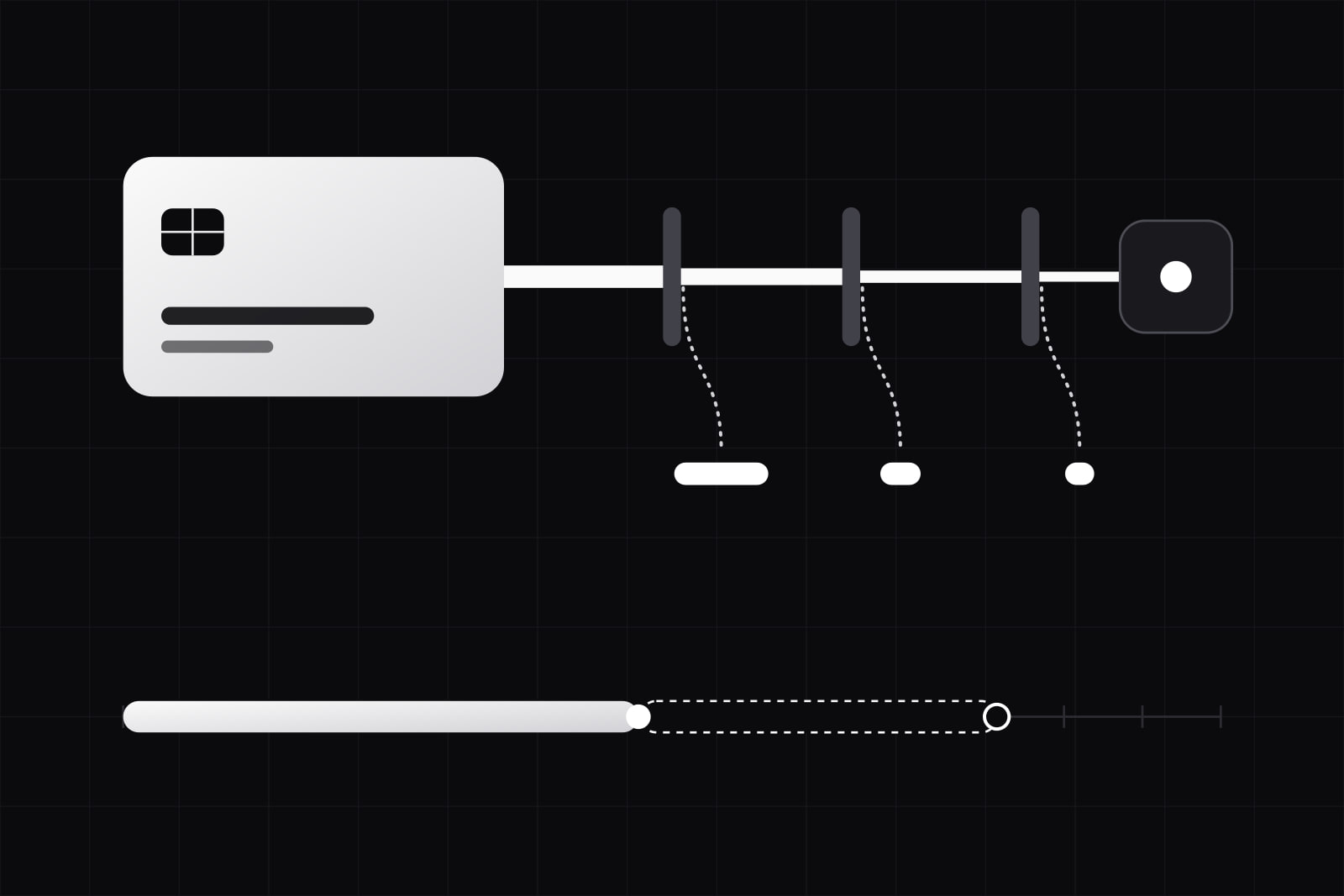
Stripe integration cost has two parts that founders routinely blur together: the percentage Stripe takes on every payment, and the one-time engineering to wire billing into your product. The first is a running line on your P&L. The second is a project with a start and an end. Reading them as one number is how billing budgets go wrong.
This is a pricing brief for a founder or finance lead scoping a SaaS build in 2026. The figures below are current Stripe rates and the engineering ranges we see for real subscription work. Your mix of plans, countries, and payment methods moves the final number, so treat these as ranges, not quotes.
The 30-second answer
On the fee side, a US online card costs 2.9% + $0.30 per charge. Add 0.7% if you run subscriptions through Stripe Billing, and 0.5% if you use Stripe Tax where you are registered to collect. On the engineering side, a plain checkout is about one engineer-week, and a production subscription system with upgrades, proration, dunning, and tax lands between $25,000 and $60,000, or four to eight weeks of a senior developer's time. The rest of this brief is where those numbers come from.
Two budgets, not one
Keep the fee and the build in separate columns. The fee is a variable cost that scales with revenue: at $20,000 in monthly subscription volume on US cards through Stripe Billing, you pay roughly 3.6% all-in, about $720 a month, before tax and international cards. The build is fixed and mostly front-loaded: you pay it once to ship, then a smaller amount to maintain. A founder who benchmarks the build against a competitor's fee, or the fee against a freelancer's quote, ends up comparing the wrong things.
What Stripe charges on every payment
Stripe's headline rate for an online card or wallet is 2.9% + $0.30 per successful charge in the US. That is the floor. Subscriptions and tax each add a layer on top.
| What you turn on | Fee on top of the card rate | What it covers |
|---|---|---|
| Payments only | 2.9% + $0.30 | a single online card charge |
| Stripe Billing | +0.7% of billing volume | recurring invoices, proration, Smart Retries, usage metering |
| Stripe Tax | +0.5% per transaction where registered | automatic tax calculation and collection |
| One-off invoices | +0.4% per paid invoice | invoicing without a subscription |
International cards commonly add around 1.5% and currency conversion around 1%, so a subscription paid on a card outside your home region can carry an effective rate above 4%. Refunds return the percentage, but Stripe keeps the fixed $0.30 from the original charge.
What the engineering actually costs
The build cost scales with how much of the billing lifecycle you own. A checkout that takes a single payment is a different job from a system that manages a customer across upgrades, failed cards, and tax jurisdictions for years. Here are the ranges we see for a competent build.
| Scope | Typical engineering time | Ballpark cost |
|---|---|---|
| One-time checkout | about 1 engineer-week | $5,000 to $15,000 |
| Subscriptions + webhooks | 2 to 3 weeks | $10,000 to $25,000 |
| Production B2B billing (proration, dunning, tax, portal) | 4 to 8 weeks | $25,000 to $60,000 |
| Marketplace on Stripe Connect | 4 to 6 weeks | $20,000 to $45,000 |
Two variables move these the most: developer experience and hosted-versus-custom UI. The same production integration that takes four to eight weeks for an engineer who has shipped Stripe before can take eight to fourteen weeks for someone doing it for the first time. Using Stripe's hosted Checkout and Customer Portal instead of building your own payment forms cuts both the time and the compliance surface.
Where the timeline actually goes
The checkout is the easy 20%. The other 80% is the machinery that keeps billing correct after the first payment clears. Four areas absorb most of the schedule.
Webhooks and reconciliation
Stripe tells your server what happened through webhooks, and it retries a failed delivery over 72 hours with exponential backoff. You need an endpoint that is idempotent, monitored, and safe to replay, plus a runbook for the day it goes down. Budget 8 to 16 hours for this plumbing alone, separate from the features it supports. Skip it and you get silent state drift: a customer who paid but shows as unpaid, or the reverse.
Proration and plan changes
When a customer upgrades mid-cycle, you credit the unused time on the old plan and charge the remainder of the new one. Stripe can compute this, but the edge cases (downgrades, trials, annual-to-monthly switches, coupons) are where the hours go, and where angry billing emails start. This is the single most underestimated line in most quotes.
Dunning for failed payments
Cards fail. Stripe Smart Retries reattempts on a schedule, seven retries over 21 days by default, and fires an invoice.payment_failed event you can hook a reminder flow onto. Skipping dunning is direct revenue leakage: a failed renewal nobody chased is churn you created yourself. For most SaaS, recovered failed payments are worth more than the entire integration cost in the first year.
Tax, SCA, and PCI
Three compliance items ride along. Stripe Tax automates calculation for 0.5% where you are registered. Strong Customer Authentication (SCA), the PSD2 rule in the EU and UK, requires two-factor authentication on most card payments over €30 or £30; Stripe triggers the 3D Secure step for you, but your flow has to handle the extra prompt without dropping the payment. PCI DSS applies to anyone taking cards: using Stripe's hosted fields keeps you in the lightest self-assessment tier (SAQ A) instead of auditing your own servers, which is a compliance project on its own.
A worked example
Take a seed-stage B2B SaaS launching two plans, monthly and annual, with a 14-day trial and self-serve upgrades. A realistic first release is Stripe Billing with hosted Checkout and the Customer Portal, webhook handling, proration on upgrades, a dunning flow, and Stripe Tax for the two countries where they are registered. That is four to six weeks of a senior engineer, roughly $25,000 to $40,000 to build, then 0.7% plus 0.5% on top of card fees while it runs. What they do not build on day one: usage metering, coupons, and multi-currency, added later when a paying customer actually needs them.
How to keep the number down
Two decisions do most of the work. First, use Stripe's hosted Checkout and Customer Portal for anything you do not have a strong product reason to own; they remove weeks of UI work and most of the PCI scope. Second, scope the first release to the plans you will actually sell on day one, and add proration, coupons, and usage metering when a real customer needs them. Building the full billing matrix before you have a paying customer is the most common way this project doubles.
If you are weighing whether to build this in-house or bring in a partner, we cover that trade-off in Stripe integration partner vs DIY, and the choice of billing layer in Stripe Billing vs RevenueCat. For the wider budget this sits inside, see how much it costs to build a SaaS in 2026.
Sources
Frequently asked questions
Both, and they are separate budgets. The engineering to build billing is a one-time project, roughly $5,000 for a plain checkout up to $60,000 for a production B2B subscription system. The Stripe fees are ongoing and scale with revenue: 2.9% + $0.30 per US card, plus 0.7% for Stripe Billing and 0.5% for Stripe Tax. Budget the build as capex and the fees as a variable cost of revenue.
Technically yes: you can run subscriptions on raw Stripe Payments and handle invoices, proration, and retries in your own code, which drops the 0.7%. In practice that code is the exact part of the integration that costs the most and breaks the most. For most SaaS under a few million in revenue, the 0.7% is cheaper than building and maintaining a correct billing engine. The math flips only at high volume, where a fraction of a percent becomes real money.
A hosted Stripe Checkout that takes a single payment can be live in a few days. Charging a customer is the fast part. What takes weeks is everything that keeps billing correct afterward: webhooks, proration on plan changes, dunning for failed cards, and tax. Plan for a first payment in days but a dependable subscription system in four to eight weeks.
Not if you use Stripe's hosted fields. When card data goes straight to Stripe through hosted Checkout or Stripe Elements, you never touch raw card numbers, which keeps you in the lightest PCI tier, SAQ A, a short self-assessment questionnaire. You only take on the heavier PCI scope if you build your own payment form that handles card data on your servers, which is rarely worth it for a SaaS.
Related services
Related articles
Business Business
European GDPR-compliant SaaS development partner: 8 checks
Publicly documented GDPR fines hit 6.11 billion euro by March 2026. Eight checks on a development partner: DPA annexes, sub-processors, region, breach clock. Business