
 AI
AIClaude integration partner: what to look for before you sign
A Claude integration partner ships production AI on Anthropic's stack. Here are the 8 checks, the 6 to 14 week timeline, and when you should not hire one.
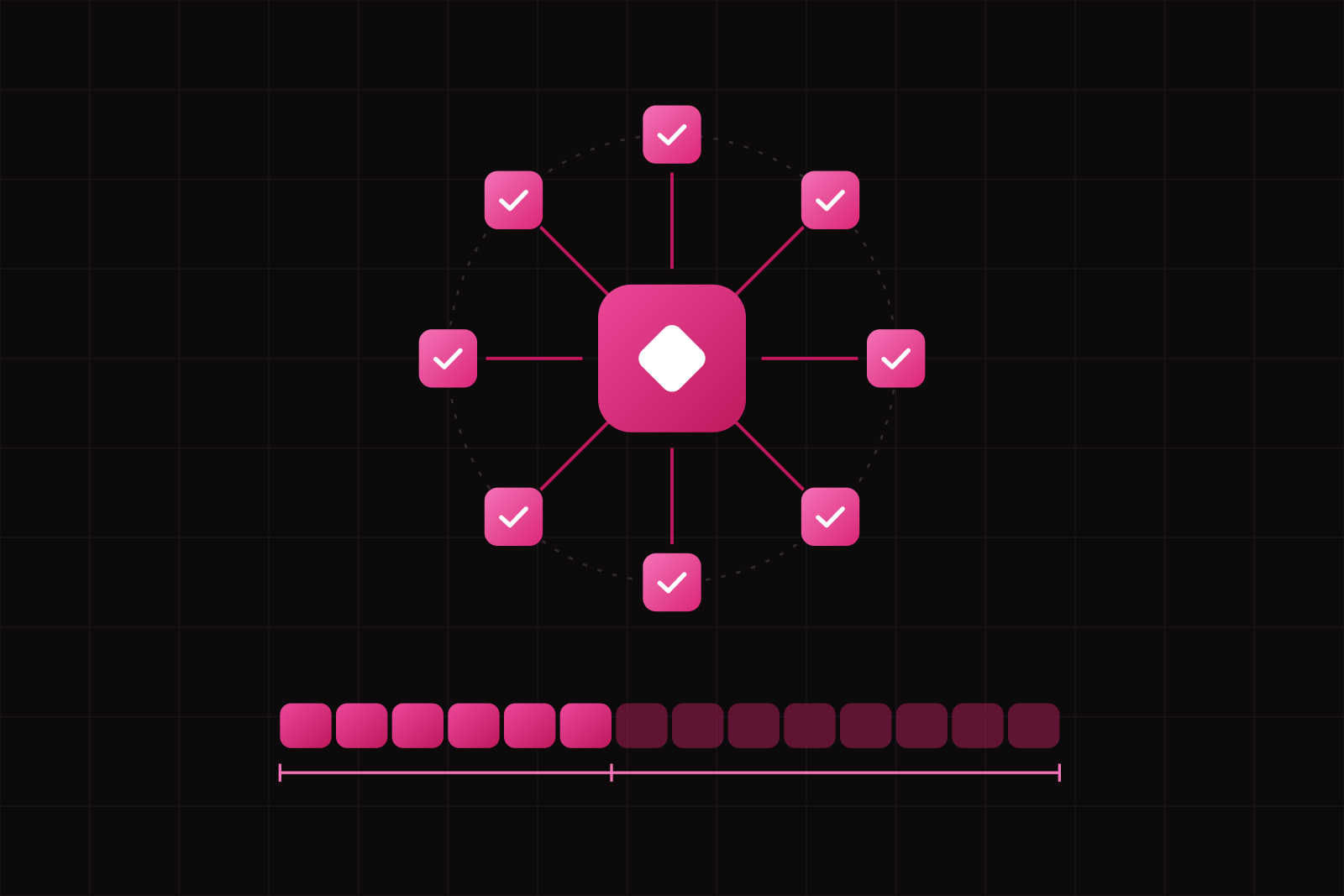
A Claude integration partner is an agency or studio that designs, ships, and operates production systems built on Anthropic's Claude API, MCP servers, and Claude Code workflows for a client. The role sits between consulting (which defines what to build) and engineering (which builds it), and the work usually covers retrieval, tool use, guardrails, evaluation, and the operational handoff.
The 30-second version
You hire one when your team has a concrete AI initiative (a chatbot, a copilot, an internal agent, an automation pipeline) but no in-house experience with the patterns that make Claude reliable in production. The partner brings model selection, prompt engineering, MCP server design, and the audit and evaluation discipline. The output you should expect: a deployed system, the runbook to operate it, and your team trained enough not to need them next quarter.
Why this category exists in 2026
Claude integration is a young category. Anthropic launched the Claude Partner Network on 12 March 2026, with an initial $100 million committed for the year. The network is split into services partners (implementation agencies and product studios), technology partners (companies building Claude into their own products), cloud partners (AWS, Google Cloud, Microsoft), and ecosystem partners. Anthropic evaluates them on three axes: client satisfaction, business performance, and technical capability, with at least one Claude Certified Architect on the team.
The Claude Certified Architect (CCA) Foundations exam is 120 minutes, 60 questions, proctored. It covers agentic architecture (27%), MCP integration (18%), Claude Code workflows (20%), prompt engineering (20%), and context management (15%). The passing score is 720 on a 100 to 1000 scale, the fee is USD 99, and the exam is closed-book. The certification is not a guarantee of quality. It is the lowest cost signal that a partner has read the platform manual.
Adjacent to the partner network, the Model Context Protocol (MCP) moved from a Claude-only convention to an industry standard. Anthropic donated MCP to the Agentic AI Foundation under the Linux Foundation in December 2025; OpenAI, Block, AWS, Google, Microsoft, Cloudflare, GitHub, and Bloomberg are members. By March 2026 the MCP SDKs reached 97 million monthly downloads, up from 2 million at launch. A Claude integration partner who does not work fluently in MCP in 2026 is selling you a 2024 architecture. See what MCP is and why your SaaS needs an MCP server for the technical primer.
How a real engagement is structured
An honest project has four phases, not a single deliverable.
- Discovery (1 to 2 weeks). The partner reads your code, your data model, your security posture, and the user prompts you already have. Output: a written scope with cost ranges per option.
- Build (3 to 8 weeks). Prompt design, MCP server where the model needs to read or write your systems, retrieval where the model needs context, evaluation harness, observability.
- Hardening (1 to 3 weeks). Guardrails, audit logs, content filters, cost ceilings, rollback procedures.
- Handover (1 to 2 weeks). Runbook, internal training, on-call coverage for the first 30 to 90 days.
Total: 6 to 14 weeks for a focused integration. Anything sold as "we will integrate Claude" in two weeks is a chatbot wrapper, not an integration.
When you should hire one
- Your team has shipped product but never shipped an LLM feature.
- The integration touches sensitive data (PHI, financial, public-sector) and you need audit trails and a BAA in place.
- You have a deadline shorter than the time your team needs to learn the platform.
- You are about to spend more than EUR 40k of internal engineering time experimenting with prompts and never measuring quality.
When you should not
- Your team already shipped one Claude-backed feature and has an evaluation harness running.
- The use case is a productivity helper and a Claude for Work seat would already solve it.
- You are still in the "is this even possible" phase. Spend two weeks with the API yourself first, then come back with a scoped problem.
The 8 checks before you sign
Walk these in order. If a vendor stumbles on the first three, stop the call.
- Named CCA on the project team. Ask which named architect on your account holds CCA-F, not whether the firm "has" the credential. The credential is held by individuals, not logos.
- Production MCP server experience. Ask to walk through a live MCP server in production: the schema, the auth model, the rate limits, the audit log. If the answer is hand-wavy, the firm has not actually shipped one.
- Evaluation harness as a deliverable. The team should propose an eval suite as a first-class artefact, not a post-launch nice-to-have. No eval, no quality claim worth anything.
- Compliance posture. Anthropic holds SOC 2 Type II and ISO 27001 (January 2026) and offers HIPAA Business Associate Agreements on Enterprise plans. A serious partner knows which contract you need and routes you to it.
- Zero-Data-Retention awareness. If your data must not leave your perimeter at the model layer, the partner should already know about Anthropic's ZDR addendum and when it is necessary.
- Model routing as a default. A real partner does not hardcode "use Claude Sonnet 4.6 for everything". They abstract model selection and they explain the cost-quality trade-off per task.
- Fixed-scope discovery, time-and-materials build. Discovery should have a fixed price and a written deliverable. Build is too dependent on what discovery finds to commit to a fixed price honestly.
- Exit plan in writing. The runbook, the eval harness, and the prompts must be your property. If any of these is gated behind the partner's proprietary platform, you are buying lock-in, not an integration.
Adjacent categories worth comparing
A Claude integration partner is one of three vendor categories most buyers should compare in 2026.
- Claude integration partner (this article): designs and ships your AI feature end to end.
- AI consulting firm: writes the strategy and the architecture, often does not ship the code.
- Managed AI platform: handles the inference layer (Bedrock, Vertex) and model selection, not the application layer.
The right buyer evaluates all three for the same problem and picks based on what they actually need. We have written deeper on what an AI-native studio means in 2026, on build vs buy on MCP servers, and on the multi-agent design patterns that survive production.
Sources
Frequently asked questions
A focused integration with a senior team usually lands between EUR 30k and EUR 120k for the full 6 to 14 week engagement, depending on the systems connected, the compliance scope, and the depth of the evaluation harness. Discovery alone runs EUR 4k to EUR 12k. The two cost drivers are the number of MCP servers built (each new system you connect is real engineering) and how deep the eval suite goes (one-shot vs continuous). Token spend in production is separate and is usually small compared to engineering cost in year one.
No. You can integrate Claude without anyone on either side holding the credential. What it signals is that the architect has been tested on the specific patterns Anthropic considers production-ready: MCP integration, prompt engineering, evaluation, and context management. For a one-off productivity feature you do not need it. For a system that touches your customers or your regulated data, you should not pay a partner that cannot put a named CCA on your account.
6 to 14 weeks for a focused integration with one team. Discovery 1 to 2 weeks, build 3 to 8 weeks, hardening 1 to 3 weeks, handover 1 to 2 weeks. Multi-system integrations (multiple MCP servers, multiple data sources, compliance reviews) can stretch to 16 to 20 weeks. Anything sold below the 6-week floor is almost certainly a chatbot wrapper rather than a real integration with retrieval, tools, evals, and observability.
A consulting firm writes the strategy and the architecture. It usually delivers a slide deck, a roadmap, and a risk register, then hands implementation back to your team or to a separate vendor. A Claude integration partner writes code, ships the system, and stays on call for the first months in production. The two are complementary, not interchangeable. Hire the consultancy when the question is 'what should we build'. Hire the partner when the question is 'build this'.
Related services
Related articles
AI AI
AIWebMCP in 2026: the browser API that lets agents use your SaaS UI
WebMCP lets a web page register tools that browser AI agents call directly. Chrome 149 runs it as an origin trial. What it changes for SaaS interfaces. AI
AI